“`html
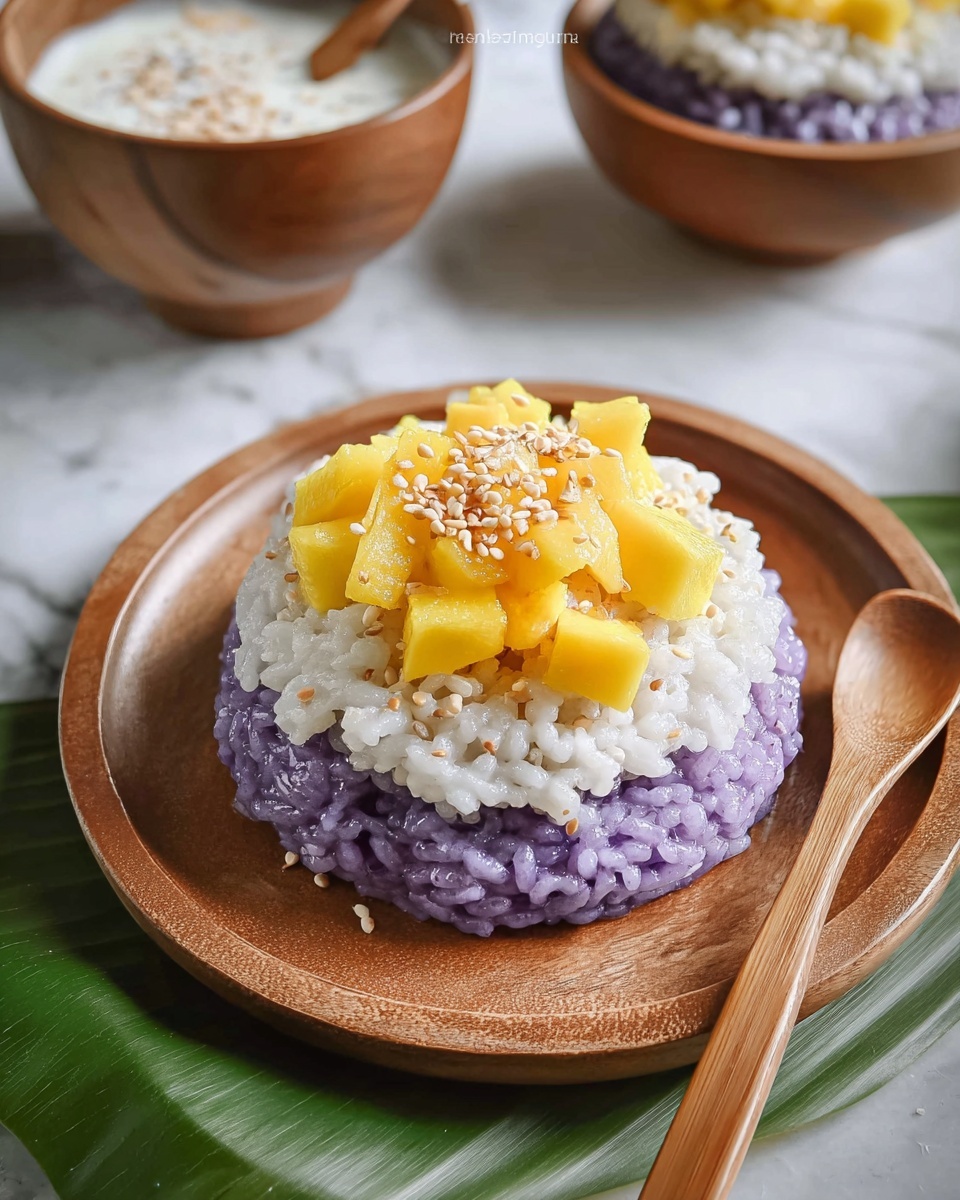
If you have a craving for something sweet, creamy, and absolutely bursting with tropical flavor, the Thai Mango Sticky Rice Recipe is going to become your new best friend in the kitchen. This beloved Thai dessert brings together tender, sticky glutinous rice infused with rich coconut milk, perfectly ripe mango slices, and just the right touch of sweetness and saltiness to balance each bite. It’s a simple yet sensational dish that’s perfect for warm evenings or any time you want a refreshing treat with a cozy, comforting feel. Once you try this iconic combination, you’ll wonder how dessert could taste so dreamy and yet so effortlessly made.
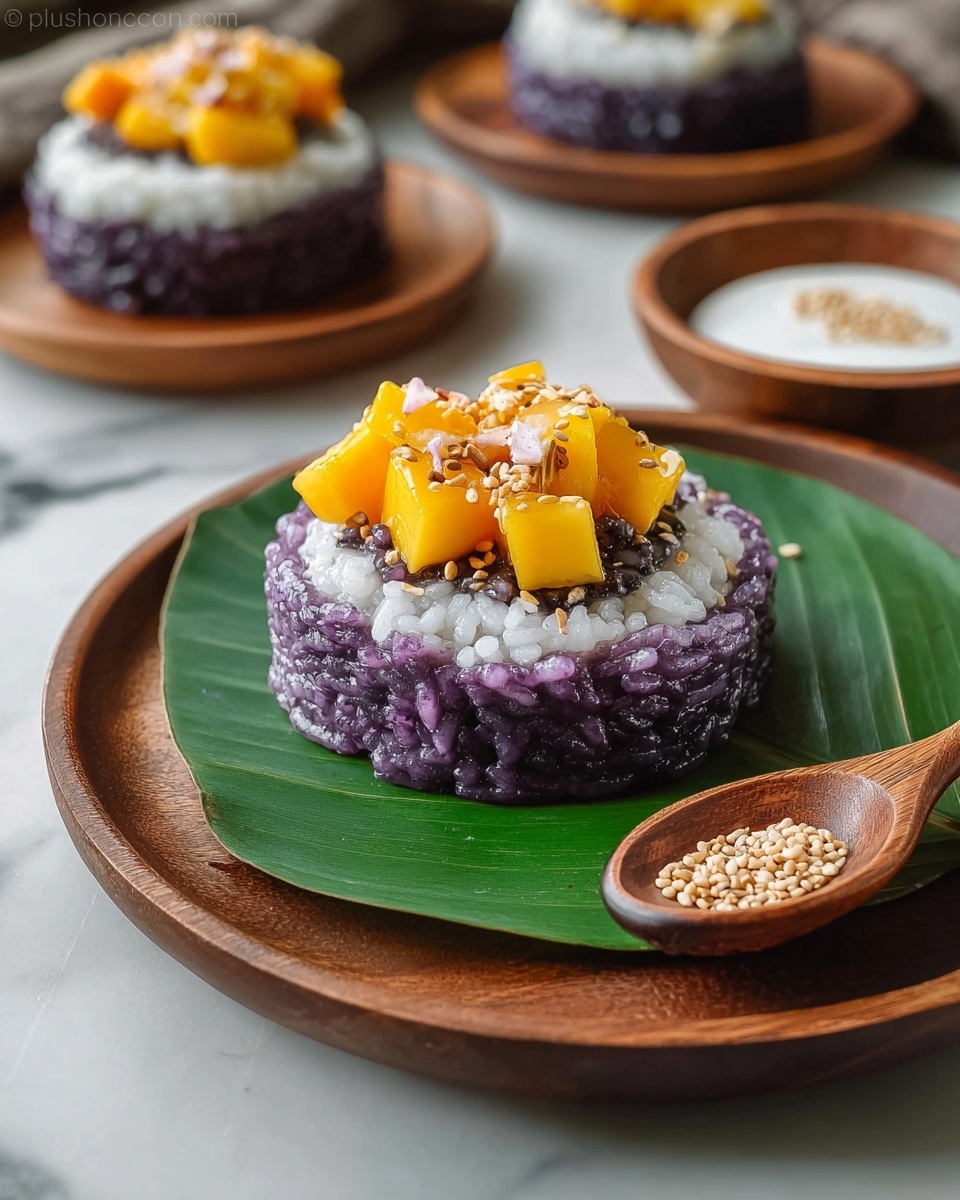
Ingredients You’ll Need
Getting the ingredients right is key to making a great Thai Mango Sticky Rice Recipe. Each component is simple but plays a crucial role in creating the perfect harmony of flavors, textures, and colors that make this dish truly special.
- 1 cup glutinous rice (soaked overnight): This is the essential sticky rice that gives the dish its characteristic chewy texture.
- 1 cup full-fat coconut milk: The richness of full-fat coconut milk offers creaminess and depth to the rice.
- ½ cup granulated sugar: Adds the perfect sweetness to balance the coconut and mango.
- ¼ teaspoon salt: A pinch of salt enhances all the flavors and prevents the sweetness from becoming cloying.
- 2 ripe mangoes (peeled and sliced): Fresh ripe mangoes provide juicy freshness and a vibrant pop of color.
- Toasted sesame seeds or mung beans (optional, for garnish): Adds a lovely nutty crunch and visual interest to your presentation.
How to Make Thai Mango Sticky Rice Recipe
Step 1: Prepare the Rice
Start by rinsing your soaked glutinous rice under cold water until it runs clear. This removes excess starch and ensures your sticky rice is perfectly tender and not gummy. Then, drain the rice well before placing it in a lined steamer. Steam the rice for about 30 minutes until it becomes sticky, tender, and translucent—the texture is everything in this dessert!
Step 2: Create the Coconut Sauce
While the rice is steaming, combine the coconut milk, granulated sugar, and salt in a small saucepan over low heat. Stir gently until the sugar dissolves completely but do not let it boil. This warm coconut sauce is where all the magic happens; it infuses the rice with rich, sweet, and creamy flavors that make the dish irresistible.
Step 3: Combine Rice and Coconut Sauce
Once your sticky rice is cooked, transfer it to a bowl and gently mix in half of the warm coconut sauce. This allows the rice to soak up all that lovely flavor. Let the rice sit for about 15 minutes so it fully absorbs the sauce and gets that perfect moist yet sticky consistency.
Step 4: Prepare the Mangoes and Serve
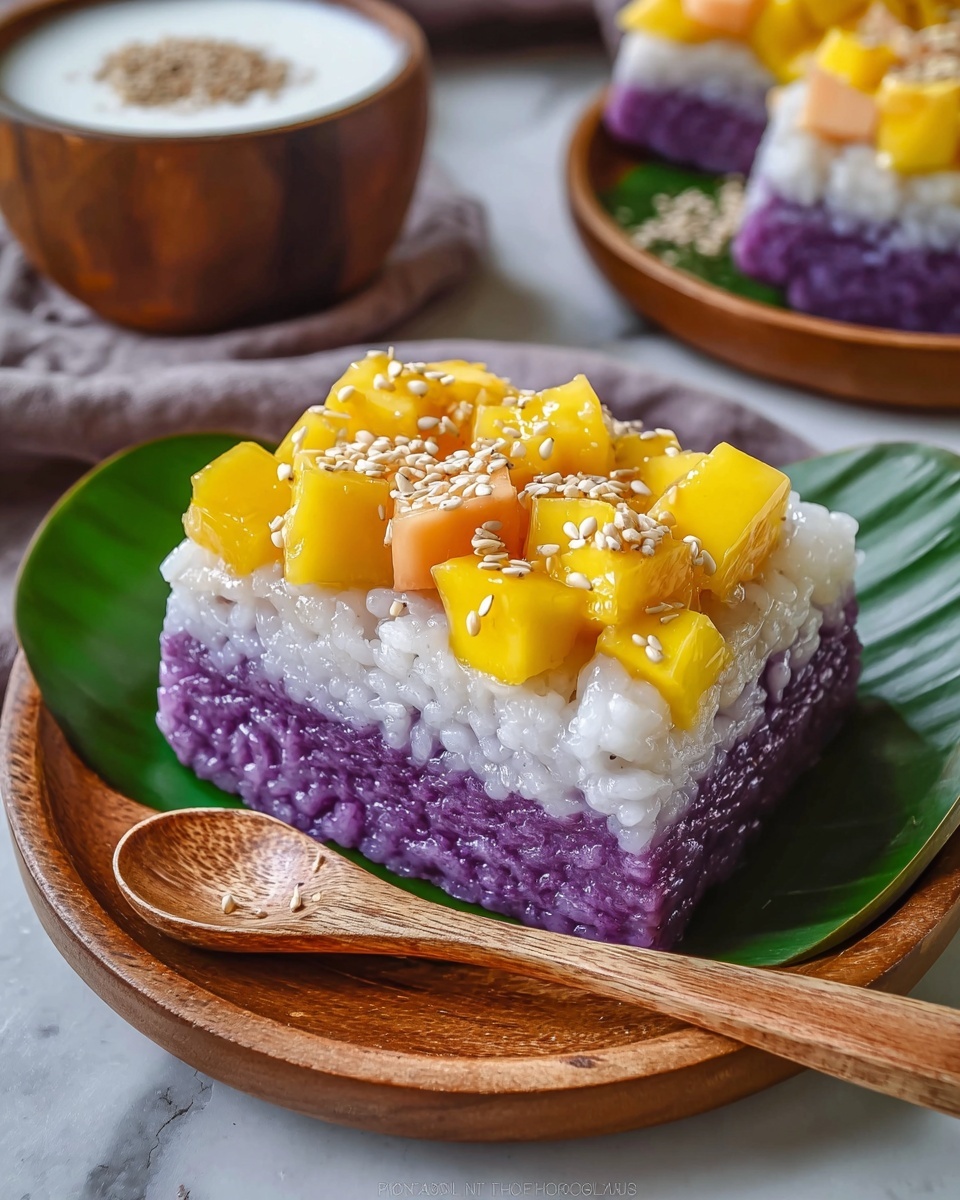
Slice your ripe mangoes into thin, beautiful wedges. To serve, mold the sticky rice neatly onto your plates, arrange the mango slices alongside or on top, then drizzle generously with the remaining coconut sauce. For extra flair and texture, sprinkle some toasted sesame seeds or crunchy mung beans over the dish. Each bite is a delightful balance of creamy, sweet, and fruity goodness that feels like a little tropical escape.
How to Serve Thai Mango Sticky Rice Recipe
Garnishes
Garnishing your Thai Mango Sticky Rice Recipe is a fun way to add textural contrast and visual appeal. Toasted sesame seeds offer a subtle nuttiness and a satisfying crunch, while roasted mung beans bring an unexpected pop of earthiness. You can also try adding a few edible flowers or a sprig of mint for a fresh, vibrant look that makes this dessert shine beautifully on the table.
Side Dishes
This dessert typically stands perfectly on its own due to its richness and sweetness. However, if you want to pair it with something light and refreshing, try serving it after a spicy Thai meal to cool the palate. A simple green papaya salad or a small portion of fresh coconut water makes a lovely contrast, balancing the creamy stickiness of the sticky rice with something crisp and refreshing.
Creative Ways to Present
Elevate your Thai Mango Sticky Rice Recipe presentation by using small clear glass bowls or dessert cups to layer the sticky rice and mango slices attractively. Alternatively, try shaping the sticky rice using silicone molds to create fun shapes like hearts or stars. You could also serve the rice inside hollowed-out mango halves for an eye-catching tropical dessert bowl that’s sure to impress friends and family.
Make Ahead and Storage
Storing Leftovers
If you have any leftovers from your Thai Mango Sticky Rice Recipe, store them in an airtight container in the refrigerator. The rice will firm up considerably once chilled, so it’s best to consume it within 1 to 2 days for the freshest taste and texture. Keep the mangoes separate to avoid any mushiness.
Freezing
Freezing sticky rice desserts is not recommended because the texture of the glutinous rice and coconut sauce will degrade after thawing. The rice tends to become hard and crumbly, and the delicate balance of flavors may be compromised. Instead, aim to enjoy this dish fresh or within a couple of days refrigerated.
Reheating
To reheat your leftover sticky rice, gently steam it or warm it in a microwave-safe dish covered with a damp paper towel to prevent drying out. Adding a splash of coconut milk while reheating can help restore some of the creamy moisture. Avoid overheating; warm it just until heated through to preserve the soft, sticky texture that makes this dessert so comforting.
FAQs
What type of rice is best for Thai Mango Sticky Rice Recipe?
The best rice for this recipe is glutinous or sticky rice, sometimes called sweet rice. It’s different from regular long-grain rice and creates the chewy, sticky texture that pairs beautifully with coconut milk and mango.
Can I use canned coconut milk for the recipe?
Absolutely! Full-fat canned coconut milk is ideal because it provides the rich, creamy texture needed. Avoid light coconut milk, as it can make the dish less indulgent and flavorful.
How do I know if the mangoes are ripe enough?
Look for mangoes that are slightly soft to the touch and have a sweet fragrance. The flesh should be vibrant yellow or orange and yield slightly when pressed gently, which means they are juicy and perfectly ripe for this dessert.
Can I prepare the rice without a steamer?
Yes! If you don’t have a steamer, you can cook the sticky rice in a pot using a very low simmer and plenty of water, draining the excess once cooked. Just be careful to avoid overcooking or turning it mushy.
Is this recipe gluten-free?
Yes, the Thai Mango Sticky Rice Recipe is naturally gluten-free, making it a wonderful dessert option for those with gluten sensitivities or celiac disease.
Final Thoughts
Making this Thai Mango Sticky Rice Recipe will quickly become one of your most treasured kitchen adventures. It’s a dish that brings joy with every spoonful, blending sweet, creamy, and fresh flavors into a perfect bite. Whether you’re sharing it with friends or indulging in a quiet treat, its warm, tropical charm never fails to satisfy. So go ahead and give this delicious classic a try—you might just find yourself adding it to your regular dessert rotation!
“`
Print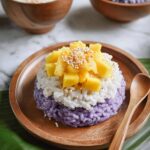
Thai Mango Sticky Rice Recipe
- Prep Time: 10 minutes
- Cook Time: 30 minutes
- Total Time: 40 minutes
- Yield: 4 servings
- Category: Dessert
- Method: Steaming
- Cuisine: Thai
- Diet: Vegetarian
Description
Thai Mango Sticky Rice is a classic Thai dessert featuring sweet, sticky glutinous rice soaked in creamy coconut milk, served alongside fresh ripe mango slices. This delightful combination offers a perfect balance of creamy, sweet, and fruity flavors, garnished optionally with toasted sesame seeds or mung beans for added texture and nutty aroma.
Ingredients
Rice and Coconut Sauce
- 1 cup glutinous rice (soaked overnight)
- 1 cup full-fat coconut milk
- ½ cup granulated sugar
- ¼ teaspoon salt
Fruit and Garnish
- 2 ripe mangoes (peeled and sliced)
- Toasted sesame seeds or mung beans (optional, for garnish)
Instructions
- Rinse the Rice: Rinse the soaked glutinous rice under cold water repeatedly until the water runs clear to remove excess starch and prevent clumping.
- Steam the Rice: Drain the rice thoroughly and place it in a lined steamer. Steam for about 30 minutes until the rice becomes sticky and translucent, indicating it is fully cooked.
- Prepare Coconut Sauce: While steaming the rice, combine the coconut milk, granulated sugar, and salt in a saucepan over low heat. Whisk gently until the sugar dissolves completely, and the sauce is warm but not boiling.
- Mix Rice with Sauce: Transfer the steamed sticky rice into a mixing bowl and pour half of the warm coconut sauce over it. Gently mix to combine and let it sit for 15 minutes, allowing the rice to absorb the flavors and become creamier.
- Slice Mangoes: Peel the ripe mangoes and slice them into thin wedges or slices for serving.
- Assemble and Serve: Mold the sticky rice onto serving plates, arrange the mango slices alongside or atop the rice, then drizzle the remaining coconut sauce over the dish. Optionally, sprinkle toasted sesame seeds or mung beans on top for a subtle crunch and nutty flavor.
Notes
- Soaking the glutinous rice overnight helps achieve the perfect sticky texture and reduces cooking time.
- Use ripe, sweet mangoes like Ataulfo or Tommy Atkins for the best flavor contrast with the creamy rice.
- Steaming rather than boiling the rice ensures it maintains a good texture without becoming mushy or waterlogged.
- The coconut sauce should be gently warmed, not boiled, to preserve its creaminess and prevent curdling.
- Optional garnishes such as toasted mung beans or sesame seeds add an authentic touch and extra texture.