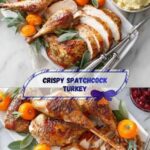
Description
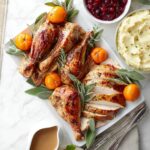
This Spatchcock Turkey recipe delivers a juicy, evenly cooked turkey with crispy golden skin by removing the backbone and flattening the bird for quicker roasting. Enhanced with kosher salt, fresh cracked pepper, and butter, this method shortens cooking time and ensures rich flavor. Serve with roasted vegetables or use leftovers for various dishes.
Ingredients
Scale
Turkey
- 1 large turkey (approximately 14 lbs), spatchcocked or butterflied
- 1 tablespoon sea salt (kosher salt)
- 1 tablespoon fresh cracked pepper
- 3 tablespoons butter (softened)
Vegetables (Optional)
- 3 pounds chopped vegetables (Brussels sprouts, carrots, butternut squash, sweet potato)
- Olive oil (for tossing, as needed)
- Salt (to taste, for vegetables)
- Pepper (to taste, for vegetables)
Additional
- 2 cups chicken stock or water (for roasting pan)
Instructions
- Prep Ahead (Optional): If possible, prep the turkey by resting it uncovered and unseasoned in the fridge for 12-24 hours before cooking. This step helps the skin dry out, promoting a crispier, golden finish during roasting.
- Prepare Vegetables (Optional): Chop your chosen vegetables and toss them with olive oil, salt, and pepper. Spread them evenly in the bottom of your roasting or deep baking pan. These vegetables will act as a natural rack for your turkey to roast upon, absorbing delicious drippings.
- Setup Roasting Equipment: If not using vegetables, place a wire rack inside your roasting pan. Remove all packaging from the turkey including plastic netting, leg ties, and remove giblets and neck from the cavity. Trim any excess skin from neck and tail using kitchen scissors.
- Spatchcock the Turkey: Place the turkey breast-side down on a cutting board. Using sharp kitchen or poultry shears, cut along both sides of the backbone to remove it, using a serrated knife for any tough bone spots. Reserve backbone and turkey parts for stock if desired.
- Flatten the Turkey: Flip the turkey breast-side up and press firmly on the breastbone with the heel of your hand to crack it. This allows the bird to lie flat for even roasting. Tuck the legs inward and the wings under the bird to prevent burning.
- Season the Turkey: Pat the turkey dry thoroughly with paper towels to promote browning. In a small bowl, combine kosher salt and black pepper. Rub salt, pepper, and softened butter all over the turkey’s surface, including under the skin if possible, to add flavor and crispiness.
- Position Turkey in Roasting Pan: Place the turkey on top of the prepared vegetables or wire rack in the roasting pan. Pour 1 cup of chicken stock or water into the bottom of the pan to keep the meat moist and create flavorful pan juices.
- Roast the Turkey: Preheat your oven to 400°F (204°C). Roast the turkey for 1 hour initially. If the skin browns too quickly, tent the bird loosely with aluminum foil. Then reduce oven temperature to 375°F (190°C) and roast for an additional 90 minutes, tenting with foil as needed to prevent burning.
- Check Internal Temperature: Using a reliable meat or instant-read thermometer, check the thickest part of the breast making sure it reaches 165°F (74°C). Also verify the thigh temperature hits 175°F (79°C). Avoid touching bone with the thermometer for accurate reading.
- Rest and Carve: Once cooked through, remove the turkey from the oven and let it rest uncovered on a large cutting board for 10-15 minutes. Resting keeps the skin crisp while allowing juices to redistribute. Carve with a sharp knife and serve warm alongside your favorite sides or save leftovers for other recipes.
Notes
- Spatchcocking reduces the overall cooking time compared to roasting a whole turkey traditionally.
- Resting the turkey uncovered in the fridge before cooking promotes crispier skin.
- Using vegetables as a roasting rack adds flavor and prevents turkey from sticking to the pan.
- Butter under the skin adds moisture and enhances browning.
- Always use a meat thermometer to ensure safe, perfectly cooked turkey.
- Save the removed backbone and scraps for homemade turkey stock.
- Tenting with foil prevents the skin from over-browning while allowing the turkey to cook thoroughly.