
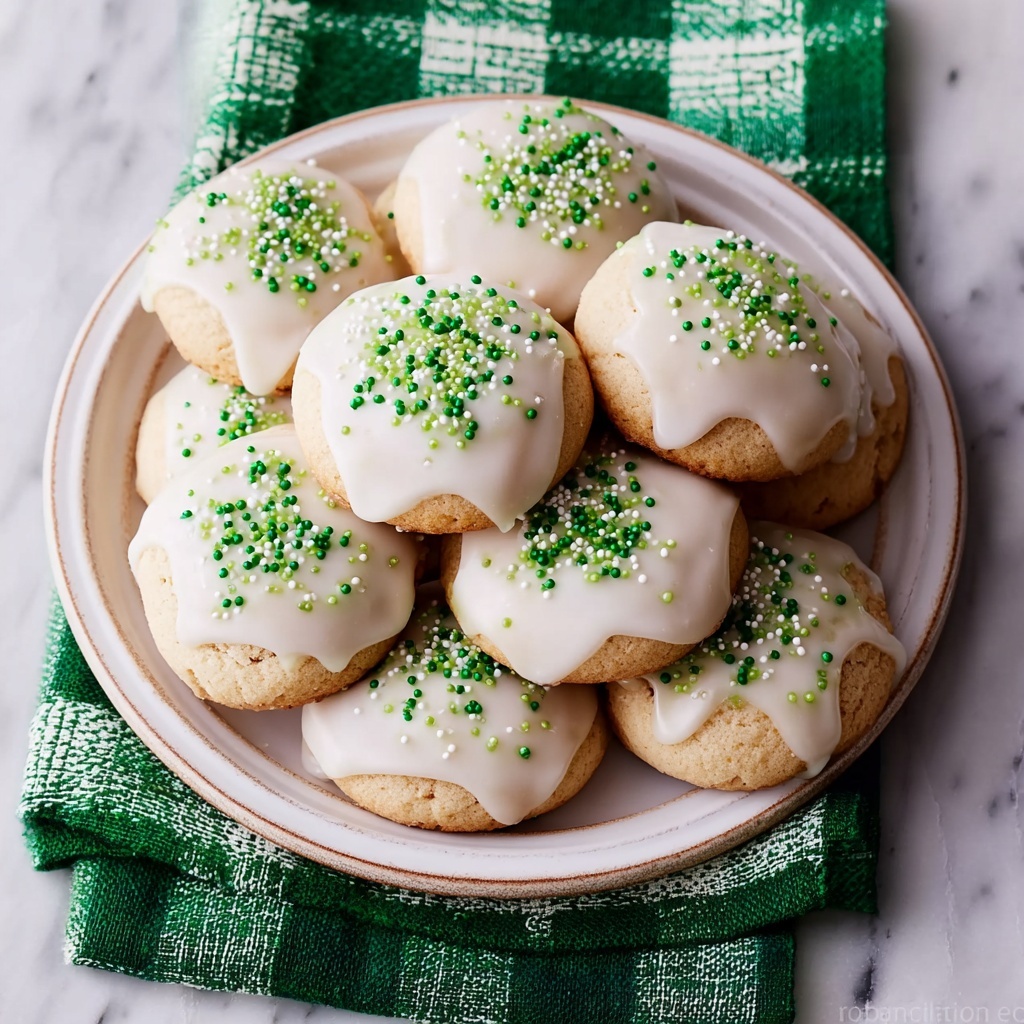
If you’re looking for a charming and delicious treat that brings a little Italian flair to your St. Patrick’s Day celebrations, then this Italian Anise Cookies for St. Patrick’s Day Recipe is exactly what you need. These cookies are wonderfully soft, lightly puffed with a subtle licorice-like anise flavor, and topped with a sweet, shimmering glaze that’s perfect for adding festive sprinkles or jimmies. They capture that perfect balance between traditional Italian baking and the fun, colorful vibe of St. Patrick’s Day, making them an irresistible addition to your holiday table.
Ingredients You’ll Need
These ingredients are simple but each plays a vital role in crafting the perfect Italian Anise Cookies. From the rich texture that comes from butter and shortening to the delicate anise extract that sets this recipe apart, each element is essential for capturing that authentic flavor and delightful texture.
- 3 cups all-purpose flour: The sturdy base that keeps your cookies tender yet structured.
- 5 teaspoons baking powder: Responsible for the light, fluffy puff your cookies achieve while baking.
- 1/2 teaspoon salt: Balances the sweetness and enhances the overall flavor.
- 1/2 cup butter or margarine: Adds richness and moistness.
- 1/4 cup shortening: Helps create a soft texture and prevents cookies from spreading too much.
- 3/4 cup granulated sugar: Brings sweetness to every bite.
- 4 eggs: Bind everything together and add a tender crumb.
- 2 teaspoons anise extract: Gives the iconic licorice flavor; can be swapped with vanilla or lemon extract if desired.
- 2 cups confectioners’ sugar (sifted): For making the glaze that gives these cookies their beautiful, sweet finish.
- 2-4 tablespoons milk: To thin the glaze just right.
- Colorful sprinkles (optional): Add a festive and playful touch perfect for St. Patrick’s Day celebrations.
How to Make Italian Anise Cookies for St. Patrick’s Day Recipe
Step 1: Preheat and Prep
Begin by heating your oven to 375°F (190°C). This temperature ensures your cookies bake just right — golden on the bottom while staying soft and light on top. Grab your cookie sheets and get ready to turn simple ingredients into magic.
Step 2: Mix Dry Ingredients
Whisk together the flour, baking powder, and salt in a bowl. This mix provides a consistent rise and tender crumb, so set it aside while you work on the wet ingredients. It’s such an easy step, but super important to avoid lumps and ensure even baking.
Step 3: Combine Wet Ingredients
Melt the butter and shortening together in the microwave — just until melted, no need to boil. Stir in the sugar until it’s well mixed with the fats. Then add in the eggs one by one, beating thoroughly after each to give a smooth, fluffy texture. Follow this by stirring in the anise extract, which transforms the batter with that signature flavor.
Step 4: Blend Dough
Pour the dry ingredients into the wet mixture and gently mix until just combined. The dough should feel soft and almost a bit sticky. If it’s too sticky to handle, sprinkle a little more flour in, but keep it on the soft side — this softness will help the cookies puff up beautifully.
Step 5: Roll and Bake
Roll the dough into small balls with your hands. They may seem tiny now, but thanks to the baking powder, these cookies will expand while baking. Space them evenly on ungreased cookie sheets. Bake for about 8 to 10 minutes, checking that the bottoms have a light golden brown color while tops remain pale — this ensures the perfect tender bite.
Step 6: Prepare the Glaze
While the cookies cool on a wire rack, mix the sifted confectioners’ sugar with milk, adding milk gradually until you achieve a thick glaze that still can be dipped. Keep it slightly thick so it will coat the cookies without dripping off.
Step 7: Glaze and Decorate
Dip the tops of your cooled cookies into the glaze, then quickly sprinkle festive colored jimmies or nonpareils over them while the glaze is still wet. This step is so fun and adds that cheerful St. Patrick’s Day vibe to your Italian Anise Cookies for St. Patrick’s Day Recipe. Let the glaze set before serving.
How to Serve Italian Anise Cookies for St. Patrick’s Day Recipe

Garnishes
Sprinkles are the classic festive touch, but fresh mint leaves or thin slices of candied lemon can also complement the anise flavor beautifully. If you’re feeling adventurous, a light dusting of finely crushed pistachios adds an unexpected texture and a gorgeous green pop perfect for March festivities.
Side Dishes
Your Italian Anise Cookies pair wonderfully with a warm cup of chai or black tea, which highlights the subtle licorice notes of the cookies. For an extra indulgent experience, serve alongside a small bowl of artisan gelato or a rich espresso for a true Italian-inspired treat.
Creative Ways to Present
Arrange the cookies on a rustic wooden tray sprinkled with shamrock-shaped confetti for a festive presentation. You can also stack them in colorful cellophane bags tied with green ribbons — perfect for sharing with friends or as charming party favors that celebrate the spirit of St. Patrick’s Day.
Make Ahead and Storage
Storing Leftovers
Keep your Italian Anise Cookies for St. Patrick’s Day Recipe fresh by storing them in an airtight container at room temperature. They will stay soft and flavorful for up to a week, making it easy to enjoy whenever that cookie craving hits.
Freezing
If you want to prep in advance, freeze unglazed cookie dough balls on a baking sheet, then transfer to a freezer-safe bag. Bake directly from frozen, adding an extra minute or two to the baking time. You can also freeze fully baked but unglazed cookies and glaze them fresh when you’re ready to serve.
Reheating
For warm, soft cookies, reheat leftovers briefly in a 300°F oven for about 5 minutes. Avoid microwaving if possible, as this can make the glaze sticky and the cookies chewy rather than delightfully tender.
FAQs
Can I substitute anise extract with something else?
Absolutely! If you don’t have anise extract or prefer a different flavor, vanilla or lemon extract makes a lovely alternative. The cookies will have a different taste but remain just as delicious.
Do I have to use shortening?
Shortening helps keep the cookies soft and prevents spreading, but you can use all butter if that’s what you have on hand. Just know the texture might be slightly less tender and the cookies might spread a bit more.
Why are the cookies puffier than other cookies?
The 5 teaspoons of baking powder in the recipe create a lot of lift, causing the cookies to puff up. This is key to achieving their classic soft and pillowy texture.
Can I make these gluten-free?
To make this recipe gluten-free, substitute the all-purpose flour with a gluten-free flour blend that includes xanthan gum for structure. Note that texture might vary slightly, but the flavor will still shine through beautifully.
How do I get the glaze thick enough?
Add milk gradually to the sifted confectioners’ sugar until you reach a thick, dippable consistency. If it’s too runny, add more sugar; too thick, add a few drops of milk. The goal is a glaze that clings to the cookie tops without dripping.
Final Thoughts
I truly hope you enjoy making and sharing this wonderful Italian Anise Cookies for St. Patrick’s Day Recipe as much as I’ve enjoyed passing it along. It’s such a fun way to embrace the holiday with a sweet twist that honors both Italian tradition and festive cheer. Grab your mixing bowl, invite a friend, and let those delicious flavors and happy colors brighten up your celebration!
Print
Italian Anise Cookies for St. Patrick’s Day Recipe
- Prep Time: 15 minutes
- Cook Time: 10 minutes
- Total Time: 25 minutes
- Yield: 60 cookies
- Category: Dessert
- Method: Baking
- Cuisine: Italian
- Diet: Vegetarian
Description
These traditional Italian cookies are perfect for celebrating St. Patrick’s Day with a festive twist. Soft and fluffy with a hint of anise extract, they are lightly baked to a tender texture and finished with a sweet, thick glaze topped with colorful sprinkles, making them as delightful to look at as they are to eat.
Ingredients
Dry Ingredients
- 3 cups all-purpose flour
- 5 teaspoons baking powder
- 1/2 teaspoon salt
Wet Ingredients
- 1/2 cup butter or margarine
- 1/4 cup shortening
- 3/4 cup granulated sugar
- 4 eggs
- 2 teaspoons anise extract (or vanilla or lemon extract as alternatives)
Glaze
- 2 cups confectioners’ sugar, sifted
- 2–4 tablespoons milk
- Colorful sprinkles (optional)
Instructions
- Preheat oven: Set your oven to 375°F to prepare it for baking the cookies.
- Mix dry ingredients: In a mixing bowl, whisk together the all-purpose flour, baking powder, and salt. Set this mixture aside.
- Prepare wet ingredients: Melt the butter and shortening in a microwave-safe bowl. In a separate mixing bowl, combine the melted butter and shortening with granulated sugar, mixing well.
- Add eggs and flavoring: Incorporate eggs one at a time into the butter-sugar mixture, beating well after each addition. Then add the anise extract for flavor.
- Combine mixtures: Add the dry ingredients into the wet ingredient bowl and mix just until combined. If the dough feels too sticky to roll, add a little more flour, but keep the dough very soft.
- Form cookies: Roll the dough into small balls and place them on ungreased cookie sheets. Remember, these cookies puff up considerably due to the baking powder.
- Bake: Bake the cookies for 8-10 minutes, aiming for lightly browned bottoms with tops that remain light. Once baked, remove the cookies to wire racks and let cool completely before glazing.
- Make glaze: Gradually mix milk into the sifted confectioners’ sugar to create a thick glaze. Keep it thick enough for dipping.
- Glaze and decorate: Dip the top of each cooled cookie into the glaze, then immediately sprinkle colorful jimmies or nonpareils on top. Dip about 10-12 cookies at a time, placing them back on the wire rack lined with wax paper to catch drips before moving on to the next batch.
Notes
- The dough is intentionally soft and sticky; add flour only sparingly if needed for rolling.
- The baking powder causes the cookies to puff, so small dough balls are recommended to manage size.
- Use anise extract for the classic flavor or substitute vanilla or lemon extract if preferred.
- To avoid mess during glazing, use wax paper under wire racks.
- Cookies should cool completely before glazing to ensure the glaze sets properly.