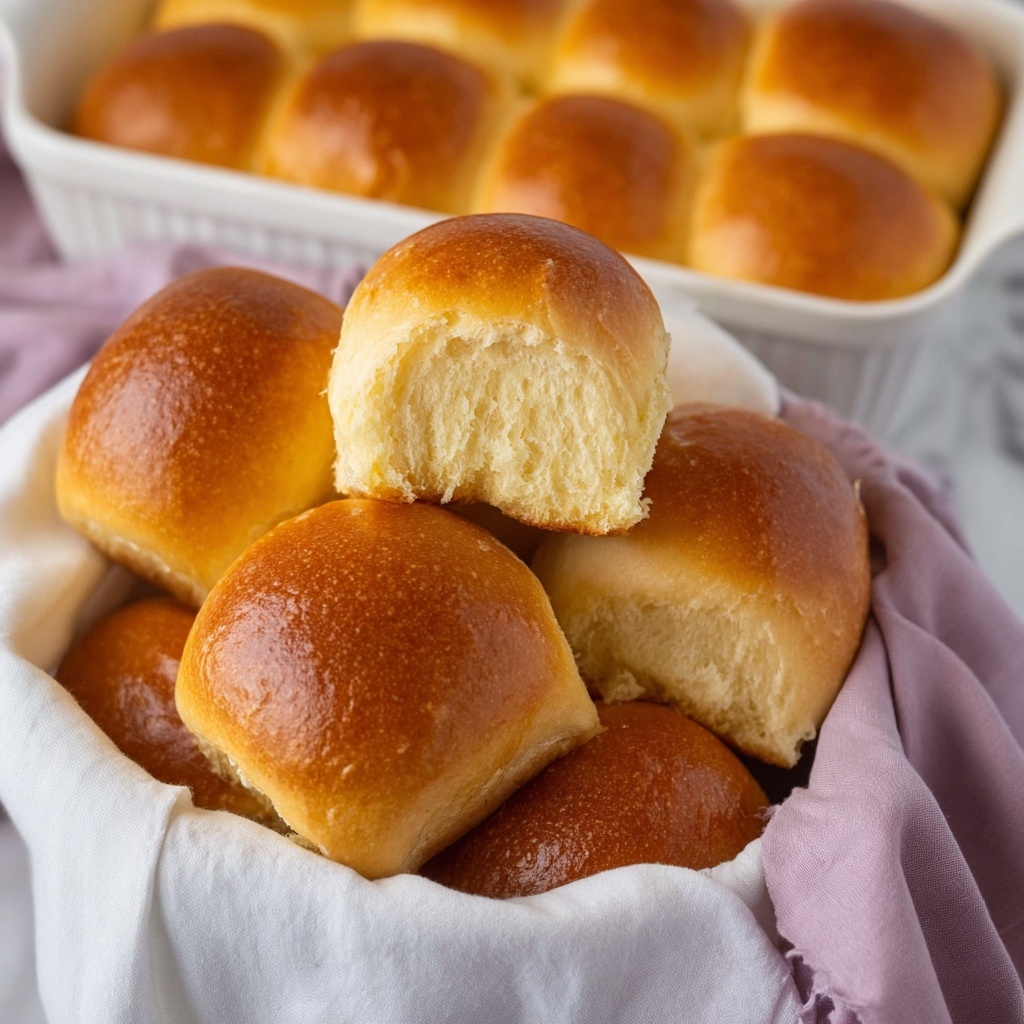
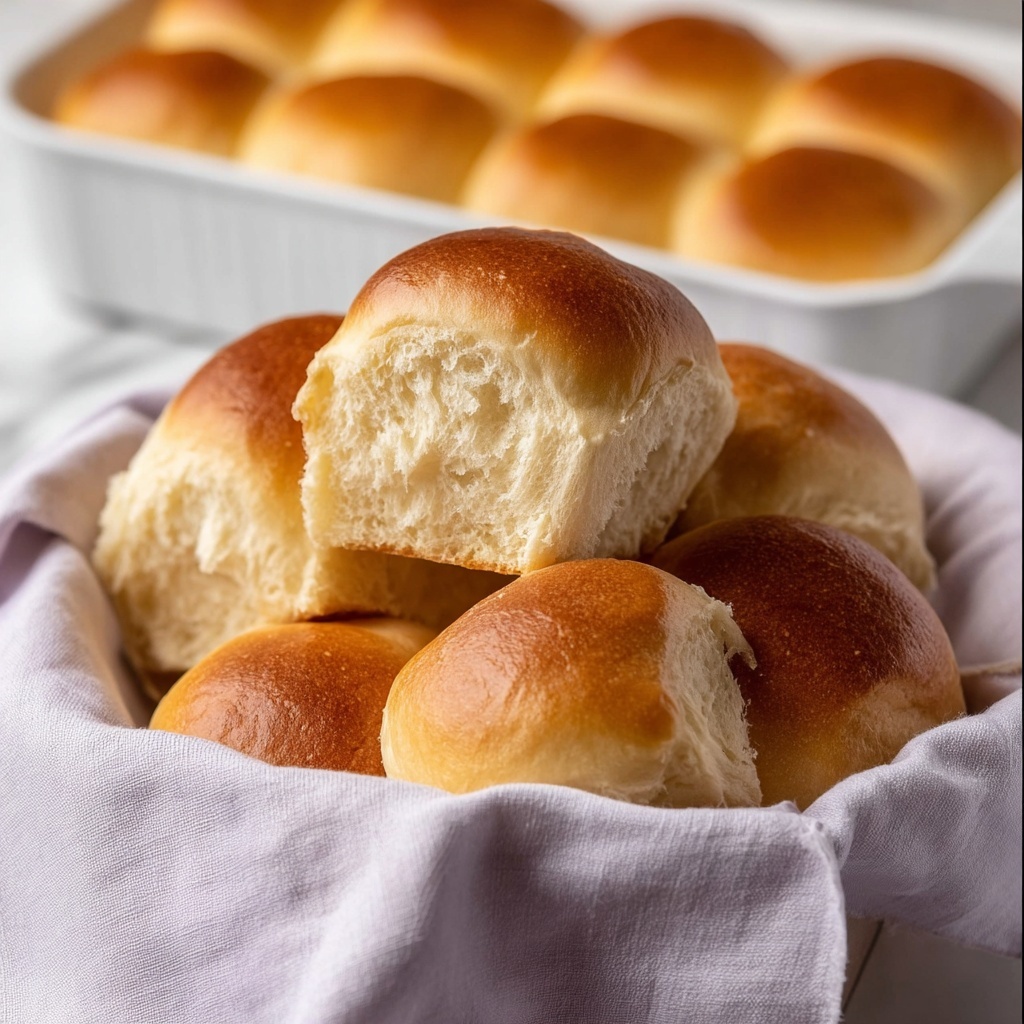
If you’re craving warm, fluffy, and irresistibly soft bread fresh from your own oven, this Homemade Dinner Rolls Recipe is going to become your ultimate favorite. These rolls have that perfect golden crust with a tender crumb inside, making them a dreamy addition to any meal, from family dinners to holiday feasts. The beauty here is the simplicity of ingredients and the sheer joy of pulling freshly baked rolls straight from your oven – nothing beats that comforting aroma and taste shared with loved ones.
Ingredients You’ll Need
Getting started with these rolls is easy because the ingredients are simple staples, each playing a vital role in creating the perfect texture and flavor. From the richness of melted butter to the gentle sweetness of honey, every element contributes to your batch of irresistibly soft rolls.
- Warm whole milk: About 1 ¼ cups at 100º F; it activates the yeast and adds moisture for tender dough.
- Honey: 2 teaspoons, which adds a subtle sweetness and helps yeast bloom beautifully.
- Active dry yeast: 2 ¼ teaspoons (one packet) is the magic that makes the dough rise and become fluffy.
- All-purpose flour: 3 cups plus extra for dusting; the foundation that provides structure and chew.
- Large egg: Adds richness and helps bind the dough together for that perfect crumb.
- Unsalted butter: 3 tablespoons melted for the dough and an additional 1-2 tablespoons cold for brushing on top to enhance flavor and sheen.
- Kosher salt: 1 teaspoon, which balances flavors and strengthens the dough.
How to Make Homemade Dinner Rolls Recipe
Step 1: Activating the Yeast
Start by stirring the warm milk and honey together in your stand mixer bowl. Sprinkle the yeast evenly over the surface and let it rest for about 5 minutes. This activates the yeast, waking it up for a lively rise.
Step 2: Forming the Initial Dough
Add 2 cups of flour to the bowl and mix on low to medium speed until the dough starts to come together. It will be sticky but still holding shape—that’s just right.
Step 3: Adding the Egg
Next, incorporate the large egg, beginning with low speed and then medium as it blends in, to ensure even distribution for a rich dough.
Step 4: Mixing in Melted Butter
Pour in the melted butter and mix again, starting slow and increasing speed slightly. The butter contributes to that melt-in-your-mouth softness.
Step 5: Gradually Adding Remaining Flour and Kneading
Once smooth, gradually add the remaining 1 cup of flour in ¼ cup increments. Knead the dough on medium speed for about 5 minutes until it’s smooth and elastic – a sign your dough is ready for some rest.
Step 6: Seasoning the Dough
Add the salt and knead briefly for about 30 seconds at medium speed to evenly distribute this essential flavor enhancer.
Step 7: First Rise
Place your dough into a greased bowl and cover it tightly. Let it rest in a warm spot for 30 to 60 minutes until it doubles in size. This rise is crucial for those light, fluffy rolls.
Step 8: Portioning the Dough
Turn the dough out onto a lightly floured surface and divide it into 16 equal pieces. This ensures consistent rolls all around.
Step 9: Shaping the Rolls
Grease a 9×16 baking dish and roll each piece between your palms to form smooth circles. Arrange these neatly into the prepared dish, giving each enough space to rise.
Step 10: Second Rise
Cover the rolls and allow them to rise again for 45 to 60 minutes until doubled in size. This second rise enhances their airy texture.
Step 11: Baking and Finishing Touch
Preheat your oven to 350° F and bake the rolls for 21 to 22 minutes until they turn a delicious golden brown. Remove from the oven and immediately brush the tops with cold butter. This gives a glossy, flavorful finish you’re going to love.
How to Serve Homemade Dinner Rolls Recipe
Garnishes
While these rolls shine beautifully on their own, finishing them with a pat of cold butter just out of the oven takes them to the next level. You can also sprinkle a touch of flaky sea salt or even a sprinkle of fresh herbs like rosemary or thyme right after baking for added flavor and visual appeal.
Side Dishes
These soft rolls complement a wide variety of meals wonderfully. They’re perfect alongside hearty soups, stews, roasted meats, or even just a simple salad. Their tender crumb is great for soaking up sauces and gravies, making every bite satisfying.
Creative Ways to Present
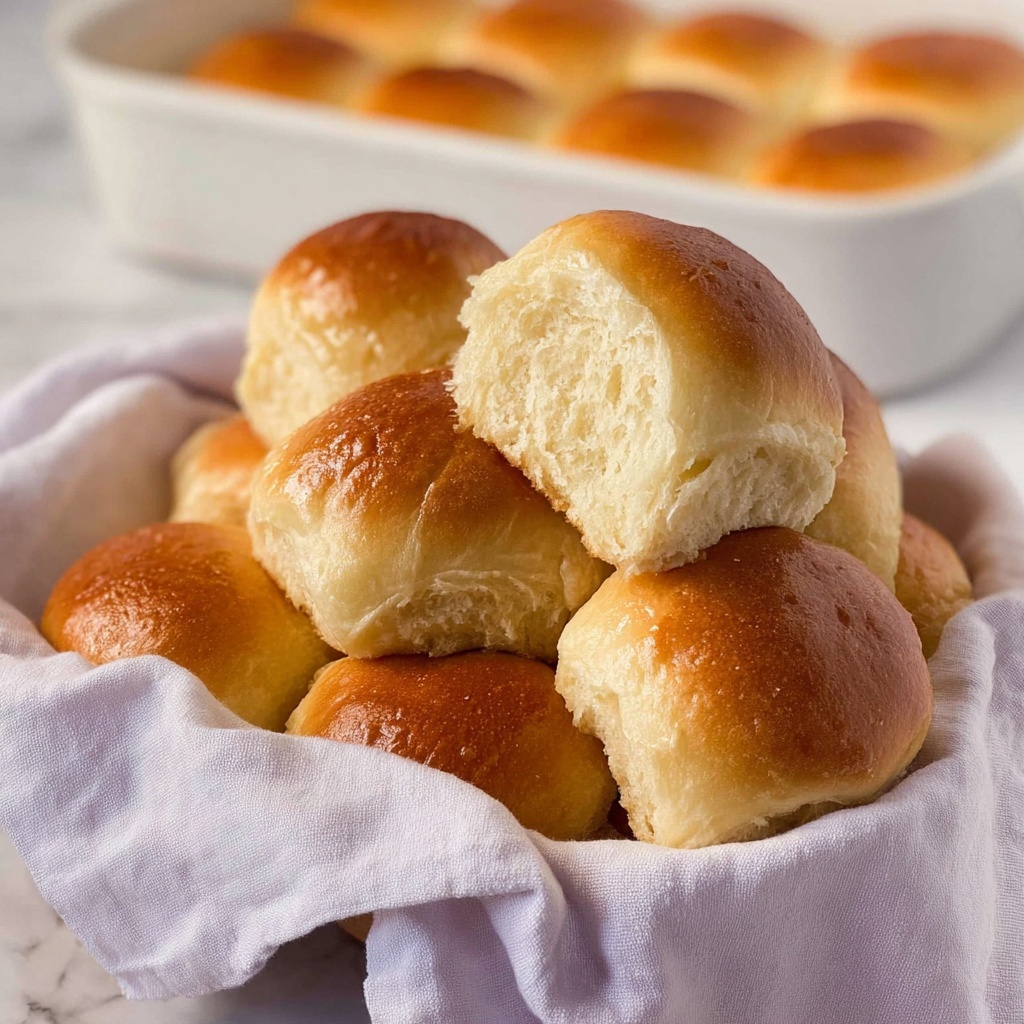
For a charming touch, arrange your rolls in a rustic basket lined with a warm cloth or serve them in a colorful bread bowl. You can also slice them in half and offer an assortment of spreads like honey butter, garlic herb butter, or jam to make your dinner table extra inviting.
Make Ahead and Storage
Storing Leftovers
Once cooled completely, store leftover rolls in an airtight container or zip-top bag. They stay soft and fresh for up to 2 days at room temperature, making them easy to enjoy the next day without losing that just-baked softness.
Freezing
If you want to keep your Homemade Dinner Rolls Recipe going beyond a couple of days, freeze them after the second rise but before baking. Arrange the dough balls on a baking sheet to freeze individually, then transfer to a freezer bag. When ready, thaw and bake as usual. You can also freeze fully baked rolls by wrapping them well to keep out moisture.
Reheating
To revive leftover rolls, warm them in the oven at 300° F for about 10 minutes. For frozen baked rolls, thaw at room temperature and then reheat. Wrapping them lightly in foil helps retain moisture, keeping them soft and delicious as if freshly baked.
FAQs
Can I use instant yeast instead of active dry yeast?
Absolutely! If you have instant yeast, you can use the same amount but mix it directly with the flour instead of activating it in the milk. It will still give you lovely fluffy rolls with a slightly quicker rise time.
What’s the best way to make sure my rolls rise properly?
The key is to proof your yeast in warm—but not hot—milk and to let your dough rise in a warm, draft-free spot. If your kitchen is chilly, placing the covered dough near a warm appliance or inside an oven with just the light on can help.
Can I make these rolls whole wheat?
You can swap part of the all-purpose flour with whole wheat, but keep in mind that whole wheat flour can make the rolls denser. A good ratio is about half all-purpose and half whole wheat flour for a healthier twist with reasonable softness.
Is it okay to use cold butter instead of melted?
This recipe calls for melted butter in the dough to incorporate evenly, but the finishing butter should be cold so it melts beautifully over hot rolls after baking. Cold butter on warm rolls creates a luxuriously rich finish.
Can I make smaller or larger rolls?
Definitely! You can adjust the size to your liking, but keep in mind that baking times will change. Smaller rolls will bake faster, while larger ones will need a bit more time to cook through. Just keep an eye on their golden color.
Final Thoughts
There’s something deeply satisfying about baking your own Homemade Dinner Rolls Recipe from scratch. With these simple ingredients and straightforward steps, you’ll create fluffy, buttery rolls that bring warmth and happiness to your table. I encourage you to try this recipe—it’s a wonderful way to make any meal feel extra special and homemade. Your family and friends will be asking for seconds, guaranteed!
Print
Homemade Dinner Rolls Recipe
- Prep Time: 20 minutes
- Cook Time: 22 minutes
- Total Time: 1 hour 37 minutes
- Yield: 16 rolls
- Category: Bread
- Method: Baking
- Cuisine: American
Description
These homemade dinner rolls are soft, fluffy, and golden brown, perfect for any meal. Made with warm milk, honey, yeast, and butter, they have a tender crumb and buttery finish that melts in your mouth. Ideal for family dinners, holidays, or any occasion needing fresh, warm bread rolls.
Ingredients
Dough Ingredients
- 1 ¼ cup warm whole milk, about 100º F or warm to the touch
- 2 teaspoons honey
- 2 ¼ teaspoons active dry yeast (1 Fleischmann’s packet)
- 3 cups all-purpose flour, plus more for dusting
- 1 large egg
- 3 tablespoons unsalted butter, melted
- 1 teaspoon kosher salt
Finishing
- 1–2 tablespoons cold unsalted butter, to finish rolls
Instructions
- Activate Yeast: In the bowl of a stand mixer, combine warm milk and honey. Stir to combine, then sprinkle yeast evenly over the top. Let it rest for about 5 minutes until the yeast becomes foamy, indicating it’s active.
- Mix Initial Dough: Add 2 cups of flour to the milk mixture. Mix on low to medium speed until a sticky dough forms and holds shape. Scrape down the bowl sides as needed to incorporate everything evenly.
- Add Egg: Introduce the large egg to the dough mixture. Mix starting at low speed and then increase to medium as the egg fully blends into the dough.
- Add Butter: Pour in the melted unsalted butter. Mix again starting at low speed moving to medium until fully incorporated and dough returns to smooth.
- Add Remaining Flour and Knead: Gradually add remaining 1 cup of flour, about 1/4 cup at a time. After all flour is added, knead the dough for 5 minutes on medium speed until smooth and elastic.
- Add Salt and Final Kneading: Add kosher salt to the dough and knead on medium speed for an additional 30 seconds to incorporate the salt evenly.
- First Rise: Transfer the dough to a greased bowl and cover it. Let it rest in a warm place for 30 to 60 minutes, or until it doubles in size. Typical rising time is about 35 minutes depending on kitchen temperature.
- Divide Dough: Turn the risen dough onto a lightly floured surface. Divide into 16 equal portions for uniform rolls.
- Shape Rolls and Arrange: Roll each dough piece between your palms into smooth circles. Place them in a greased 9×16-inch baking dish, arranging them evenly.
- Second Rise: Allow the shaped rolls to rise in the baking dish for 45 to 60 minutes until doubled in size, ensuring a light and fluffy texture.
- Bake: Preheat your oven to 350°F (175°C). Bake the rolls for 21-22 minutes until they turn a golden brown.
- Finish with Butter: Remove rolls from the oven and immediately spread cold butter over the top, letting it melt into the warm rolls for a rich, buttery finish.
Notes
- Use warm milk (about 100º F) to ensure yeast activates properly but does not kill it.
- The rising times can vary depending on room temperature; warmer environments speed up fermentation.
- For softer crusts, covering the baking dish with foil halfway through baking can help retain moisture.
- Butter finishing adds flavor and shine, but can be omitted for a less rich option.
- Rolls can be stored at room temperature in an airtight container for up to 2 days or frozen for longer storage.