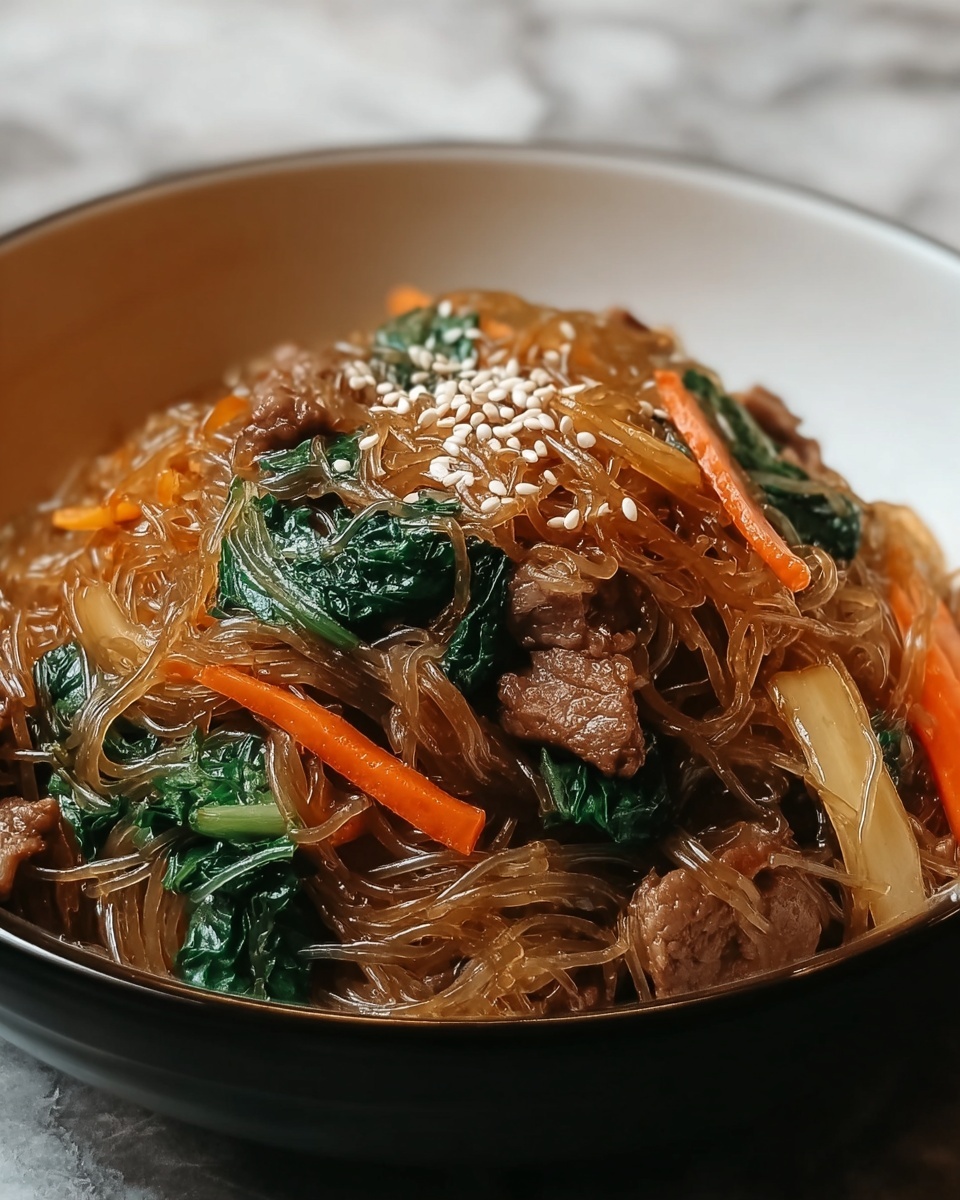
If you’ve ever tasted Korean cuisine, you’ll know how addictive its flavors can be, and this Easy Korean Japchae Noodles with Beef and Vegetables Recipe perfectly captures that magic. This vibrant dish combines chewy sweet potato noodles with tender slices of beef and a colorful medley of vegetables, all tossed in a sweet-savory sauce that will have you reaching for seconds. It’s an absolute crowd-pleaser and surprisingly simple to prepare, making it a fantastic recipe to bring some Korean comfort food to your table anytime you want.

Ingredients You’ll Need
The beauty of this recipe lies in its straightforward ingredients, each carefully chosen to bring the perfect balance of flavor, texture, and color to your japchae. From the glossy, translucent sweet potato noodles to the fresh crunch of the vegetables and the rich, savory beef, every component plays an essential role in making this dish irresistible.
- 2 lb thin-sliced beef: Provides juicy, flavorful protein that soaks up the savory sauce beautifully.
- 1 lb Korean sweet potato noodles (glass noodles): Known for their chewy texture and ability to absorb sauces, they are the star of this dish.
- 3 medium carrots, julienned: Adds a sweet crunch and vibrant orange color to brighten the plate.
- 1 large white onion, thinly sliced: Offers a mild sweetness that mellows during cooking, balancing the flavors.
- ½ bunch green onions, chopped: Brings a fresh, sharp note and a pop of green for visual appeal.
- 6 garlic cloves, minced: Infuses the dish with warm, aromatic depth.
- ½ lb spinach leaves: Adds earthiness and a tender leafy texture that complements the noodles.
- 4 tbsp sesame oil (divided): Delivers nutty richness and the unmistakable flavor essential in Korean cooking.
- 1 tbsp olive oil: Used for sautéing vegetables and noodles to keep everything perfectly coated and tender.
- 6 tbsp soy sauce (or tamari for gluten-free): Provides the salty, umami backbone that ties all ingredients together.
- 3 tbsp brown sugar: Balances the salty soy sauce with a mellow sweetness for harmony.
How to Make Easy Korean Japchae Noodles with Beef and Vegetables Recipe
Step 1: Cook the Noodles
Start by bringing a large pot of water to a boil and add a drizzle of olive oil to prevent sticking. Drop in the Korean sweet potato noodles and let them cook for around 5 to 6 minutes until tender but still chewy. Drain well and set aside, as these noodles are the heart of the dish and their texture is key to authentic japchae.
Step 2: Cook the Beef
While the noodles are cooking, heat a skillet over high heat and add the thinly sliced beef. Cook it until it develops a nice brown crust, then season it with half of your soy sauce, sesame oil, and brown sugar. This step lets the beef soak up those classic Korean flavors, creating a juicy, caramelized bite. Once cooked through, set the beef aside to rest.
Step 3: Sauté the Vegetables
In another skillet, heat the olive oil and toss in the julienned carrots and thinly sliced white onion. Cook them gently until they soften but remain crisp, preserving their fresh textures. Then add the rest of the soy sauce, sesame oil, and brown sugar, stirring to coat evenly. Mix in the minced garlic and chopped green onions and cook for just about a minute more to release their vibrant flavors.
Step 4: Add the Spinach
Toss in the fresh spinach leaves and stir continuously until they wilt down, turning a bright green. Spinach adds an earthy counterpoint to the sweetness and richness in the japchae, completing your delicious vegetable mix.
Step 5: Combine Ingredients
Now comes the fun part. In a large bowl, combine the cooked noodles, sautéed vegetables, and the browned beef. Toss everything together thoroughly to ensure each noodle strand is coated with that irresistible sauce and every bite has a perfect balance of beef and veggies. This step unites all the flavors and textures into one harmonious dish.
Step 6: Serve
Serve the japchae warm, allowing the aroma of sesame oil and soy sauce to welcome your senses. If you want a little extra freshness, garnish with additional green onions. This is the moment your Easy Korean Japchae Noodles with Beef and Vegetables Recipe truly shines and becomes a feast for the eyes and palate alike.
How to Serve Easy Korean Japchae Noodles with Beef and Vegetables Recipe
Garnishes
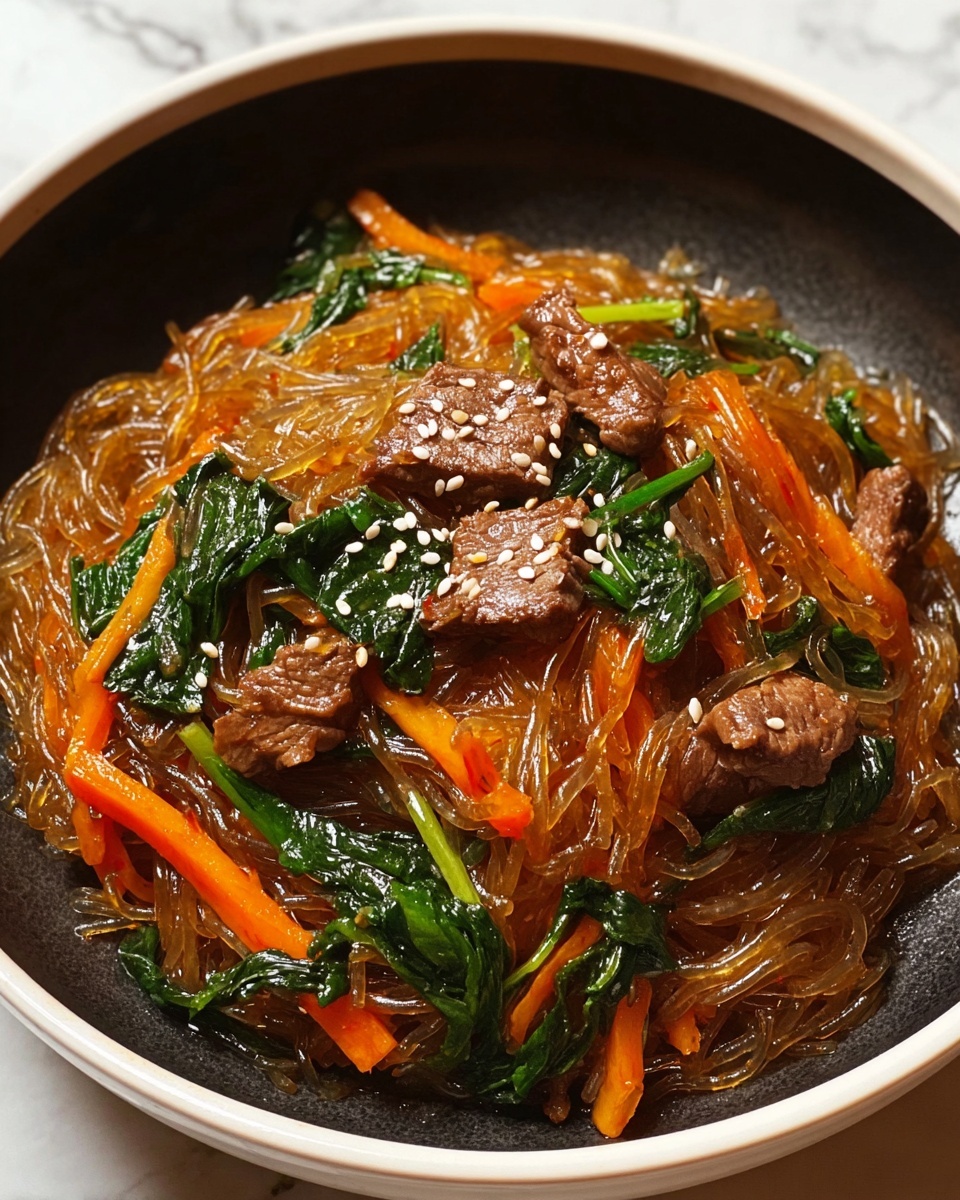
To elevate your japchae even further, sprinkle toasted sesame seeds on top for a lovely nutty crunch and an inviting aroma. You can also add a few slivers of red chili or thinly sliced bell peppers for a subtle spicy kick and additional color contrast that makes the dish pop.
Side Dishes
This dish pairs wonderfully with simple Korean sides like kimchi, which adds a spicy, tangy punch. You could also serve it alongside steamed rice or a light cucumber salad to balance the rich flavors of the japchae and keep the meal refreshing and satisfying.
Creative Ways to Present
If you’re hosting a dinner or want to impress guests, serve your japchae in individual bamboo baskets or on large leaves for a traditional aesthetic. You might even consider layering the noodles with sliced boiled eggs or arranging the colorful vegetables artistically on top to make each plate Instagram-worthy.
Make Ahead and Storage
Storing Leftovers
Japchae tastes fantastic even the next day, making it a great make-ahead meal. Store leftover noodles in an airtight container in the refrigerator for up to 3 days, ensuring you cover it well to keep moisture and flavors intact.
Freezing
While japchae is best enjoyed fresh, you can freeze leftovers if needed. Place portions in freezer-safe containers or bags and freeze for up to a month. When defrosting, do so overnight in the refrigerator and reheat gently to preserve texture and avoid mushiness.
Reheating
To bring your japchae back to life, reheat it in a skillet over medium-low heat with a splash of water or additional sesame oil to keep things moist. Stir often to prevent sticking and to evenly warm the noodles, beef, and vegetables without overcooking.
FAQs
Can I use a different protein besides beef?
Absolutely! This Easy Korean Japchae Noodles with Beef and Vegetables Recipe is super versatile. You can swap the beef for chicken, tofu, or shrimp depending on your preference or dietary needs, and it will still be delicious.
Where can I find Korean sweet potato noodles?
These glass noodles are typically available at Asian grocery stores or online. Look for “dangmyeon,” which is the Korean name for sweet potato starch noodles, the essential component for authentic japchae.
Is japchae gluten-free?
The noodles themselves are gluten-free since they’re made from sweet potato starch. To keep the dish gluten-free, simply use tamari instead of soy sauce, and avoid any seasoning sauces that might contain wheat.
How long does japchae last in the fridge?
You can store japchae in the refrigerator for up to 3 days. The flavors meld beautifully over time, but be sure to keep it sealed tightly to avoid drying out.
Can I make japchae spicy?
Definitely! You can add sliced fresh chili peppers, chili flakes, or a drizzle of gochujang (Korean chili paste) to the sauce to give your japchae a spicy kick that suits your taste.
Final Thoughts
There is something truly satisfying about making and sharing the Easy Korean Japchae Noodles with Beef and Vegetables Recipe, whether it’s a weeknight dinner or a special occasion. Its vibrant colors, bold flavors, and comforting textures come together effortlessly, making it a beloved dish to add to your recipe collection. I can’t wait for you to try this recipe and experience firsthand why japchae is a Korean favorite around the world. Happy cooking!
Print
Easy Korean Japchae Noodles with Beef and Vegetables Recipe
- Prep Time: 15 minutes
- Cook Time: 20 minutes
- Total Time: 35 minutes
- Yield: 4 to 4 servings
- Category: Main Course
- Method: Stovetop
- Cuisine: Korean
Description
Japchae is a classic Korean dish featuring stir-fried sweet potato glass noodles, thinly sliced beef, and a medley of colorful vegetables. Tossed in a savory-sweet sauce made with soy sauce, sesame oil, and brown sugar, this dish is both flavorful and comforting. Perfect for a quick weeknight dinner or a festive occasion, japchae is easily adaptable with chicken, tofu, or shrimp as protein alternatives.
Ingredients
Protein
- 2 lb thin-sliced beef (or substitute with chicken, tofu, or shrimp)
Noodles
- 1 lb Korean sweet potato noodles (glass noodles)
Vegetables
- 3 medium carrots, julienned
- 1 large white onion, thinly sliced
- ½ bunch green onions, chopped
- 6 garlic cloves, minced
- ½ lb spinach leaves
Oils and Sauces
- 4 tbsp sesame oil (divided)
- 1 tbsp olive oil
- 6 tbsp soy sauce (or tamari for gluten-free)
- 3 tbsp brown sugar
Instructions
- Cook the Noodles: Bring water to a boil in a large pot with a drizzle of olive oil. Add the sweet potato noodles and cook for 5-6 minutes until tender. Drain the noodles and set them aside while you prepare the other ingredients.
- Cook the Beef: In a skillet over high heat, cook the thinly sliced beef until it is browned. During cooking, season with half of the soy sauce, half of the sesame oil, and half of the brown sugar to infuse flavor. Once cooked, remove the beef and set it aside.
- Sauté the Vegetables: Using another skillet, heat the olive oil. Add the julienned carrots and thinly sliced onion, cooking until they become soft and fragrant. Add the remaining soy sauce, sesame oil, and brown sugar, stirring well. Toss in the minced garlic and chopped green onions, cooking for an additional minute to combine flavors.
- Add the Spinach: Add the fresh spinach leaves to the skillet and stir them until just wilted. This should take only a minute or two to retain the spinach’s vibrant color and nutrition.
- Combine Ingredients: In a large bowl, combine the cooked noodles, sautéed vegetables, and cooked beef. Toss everything thoroughly to ensure the flavors are well mixed and the noodles are evenly coated with the sauce.
- Serve: Serve the japchae warm, garnished with extra chopped green onions if desired. Enjoy this delicious, colorful dish as a main course or side.
Notes
- You can substitute the beef with chicken, tofu, or shrimp depending on dietary preference.
- For a gluten-free version, use tamari instead of soy sauce.
- Adjust the brown sugar amount based on your preferred sweetness level.
- Be careful not to overcook the glass noodles as they can become mushy.
- Japchae can be served warm or at room temperature, making it versatile for different occasions.