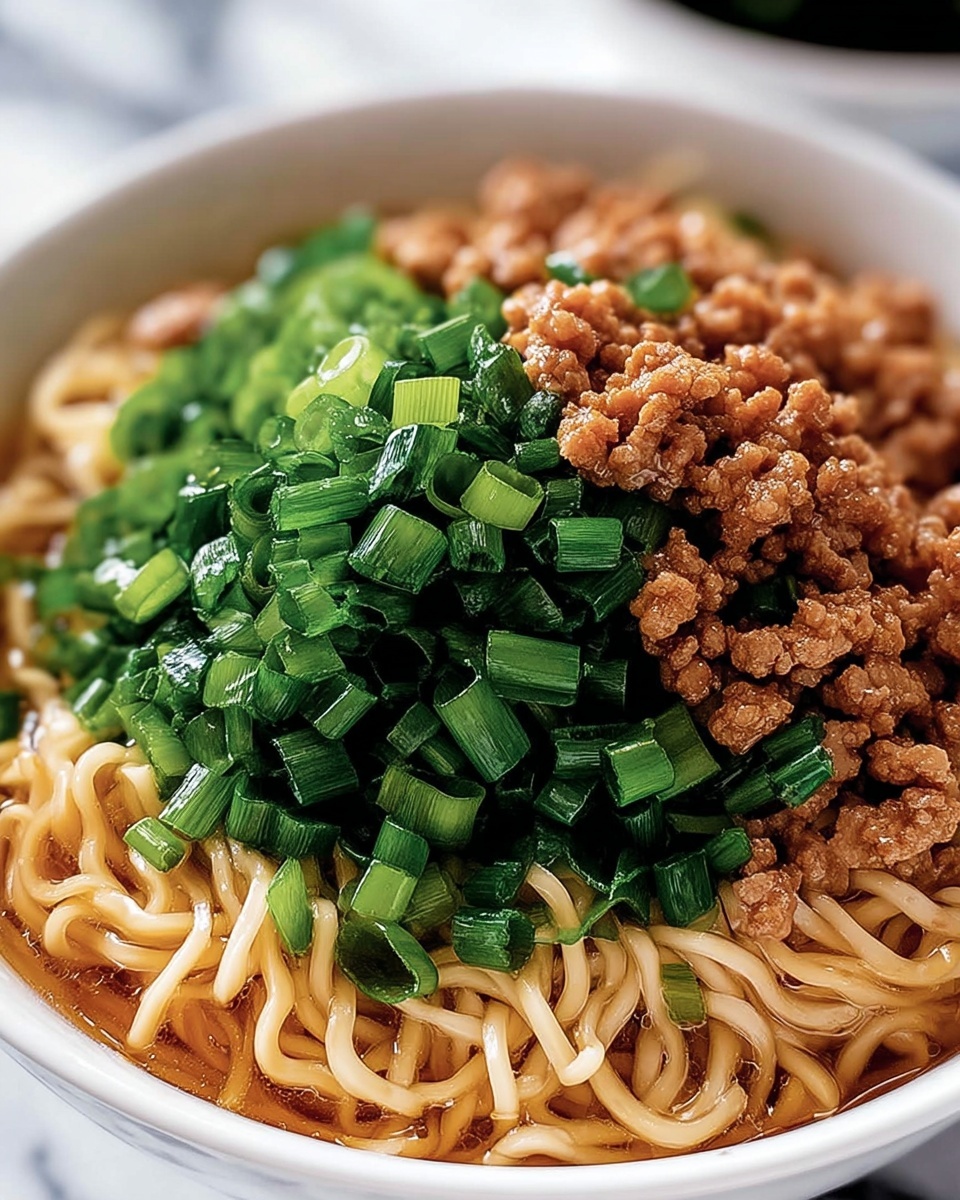
If you have ever dreamed of tasting a bowl bursting with fiery flavors and a tangle of perfectly coated noodles, you are in for a treat. Dan Dan Noodles: A Delicious Guide to This Spicy Sichuan Classic Recipe brings the exciting culinary heritage of Sichuan right to your kitchen table. With layers of spicy, tangy, nutty, and savory notes all dancing together, this dish is not just a meal; it’s an experience that tantalizes your taste buds and warms your heart. Whether you’re new to Sichuan food or a longtime lover, this recipe will quickly become a favorite go-to for cozy dinners or impressing friends with your global cooking chops.
Ingredients You’ll Need
The magic of this recipe lies in its simplicity—each ingredient plays a crucial role in building the perfect balance of heat, texture, and flavor. From the spicy bean paste to the creamy peanut butter and fresh aromatics, these essentials come together beautifully to create that iconic Dan Dan experience.
- 8 oz. fresh or dried Chinese wheat noodles: The chewy foundation that soaks up all the rich sauce wonderfully.
- 1 tablespoon vegetable oil: For sautéing the meat and helping develop a rich, umami base.
- 1/2 pound ground pork (or chicken): Adds meaty depth and texture with a nice browning potential.
- 2 cloves garlic, minced: Introduces fragrant sharpness that brightens the dish.
- 1 tablespoon ginger, minced: Gives a fresh, zesty kick integral to Sichuan flavors.
- 2 tablespoons doubanjiang (spicy bean paste): The soul of the dish, delivering authentic heat and fermented complexity.
- 1 tablespoon soy sauce: For a savory saltiness that ties all the ingredients together.
- 1 tablespoon rice vinegar: Adds a clean acidity that balances the richness.
- 1 tablespoon sesame oil: Provides a nutty aroma and silky mouthfeel.
- 1 tablespoon peanut butter (or tahini): Brings creaminess and a subtly sweet nuttiness.
- 1 cup chicken broth (or water): Helps create the luscious sauce that coats every noodle.
- 2 green onions, chopped: For fresh crunch and color as a garnish.
- 1/4 cup roasted peanuts, crushed: Adds delightful texture and extra nutty flavor as topping.
- 1 tablespoon chili oil (optional): For those who crave more spice and that glossy, fiery finish.
- Fresh cilantro (optional): Offers a bright, herbal contrast to balance the boldness.
How to Make Dan Dan Noodles: A Delicious Guide to This Spicy Sichuan Classic Recipe
Step 1: Cook the Noodles
Begin by bringing a large pot of water to a boil with a pinch of salt to season the noodles right from the start. Add your noodles—fresh ones will only take a couple of minutes, while dried might need about five to seven. Stir occasionally to keep them from sticking together. Once perfectly al dente, drain and rinse under cold water to stop cooking and keep them springy.
Step 2: Brown the Meat
Now, grab a large skillet or wok and heat your vegetable oil over medium heat. Toss in the ground pork or chicken. Cook it until it has a beautiful golden brown color, usually around five to seven minutes. This step builds a rich flavor base and texture that makes the dish irresistible.
Step 3: Build the Aromatics
Stir in the minced garlic and ginger. Cook them just until fragrant, about a minute. This step fills your kitchen with that signature Sichuan aroma that will have everyone eager to dive into their bowls.
Step 4: Add the Spicy Bean Paste
Now comes the heart of the sauce—doubanjiang. Mix it thoroughly with the meat and aromatics, letting its deep red color and spicy, fermented flavor blend in and create a spicy-sweet foundation that’s utterly addictive.
Step 5: Layer the Sauces
Pour in the soy sauce, rice vinegar, and sesame oil, stirring for a couple of minutes. This combination adds layers of salty, tangy, and nutty goodness that perfectly complement the spicy base.
Step 6: Stir in Peanut Butter
Next, incorporate the peanut butter or tahini until the sauce turns creamy and rich. This ingredient tames the heat slightly while lending the dish a smooth, luscious mouthfeel that clings lovingly to each noodle strand.
Step 7: Simmer with Broth
Gradually add the chicken broth or water while stirring. Let this simmer for around three to five minutes so the sauce thickens just right and all the flavors harmonize beautifully.
Step 8: Combine with Noodles
Add the cooked noodles directly into the skillet with your sauce. Toss everything together gently, ensuring each noodle is saturated with that flavorful coating. If the sauce feels too thick, add a bit more broth or water to loosen it up. Cook everything for a couple more minutes to heat through perfectly.
Step 9: Garnish and Serve
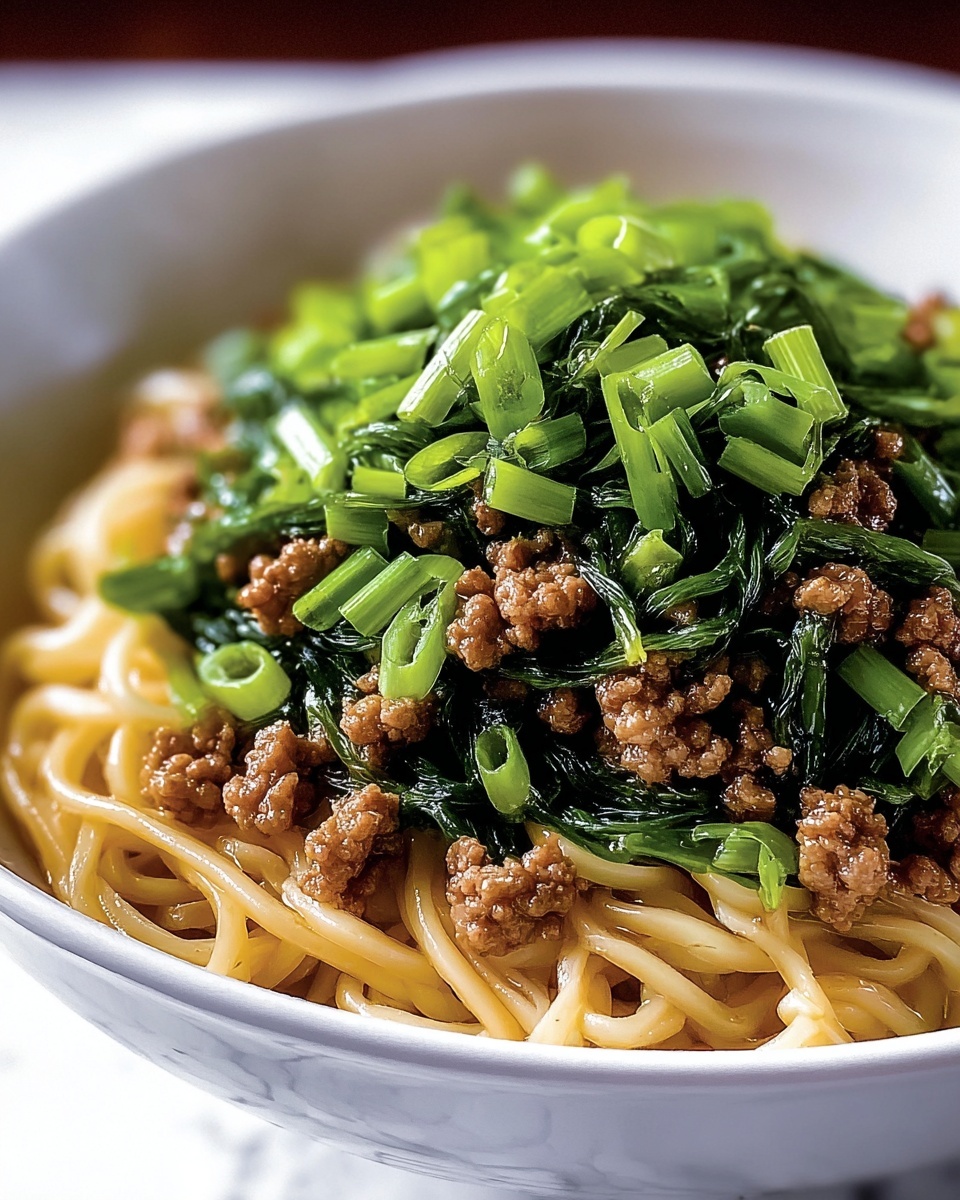
Finally, take your noodles off the heat and plate them into serving bowls. Sprinkle with chopped green onions, crushed roasted peanuts, and a drizzle of chili oil if you want extra fire. For a fresh herbal lift, add some fresh cilantro on top. Serve immediately and enjoy the explosion of flavors.
How to Serve Dan Dan Noodles: A Delicious Guide to This Spicy Sichuan Classic Recipe
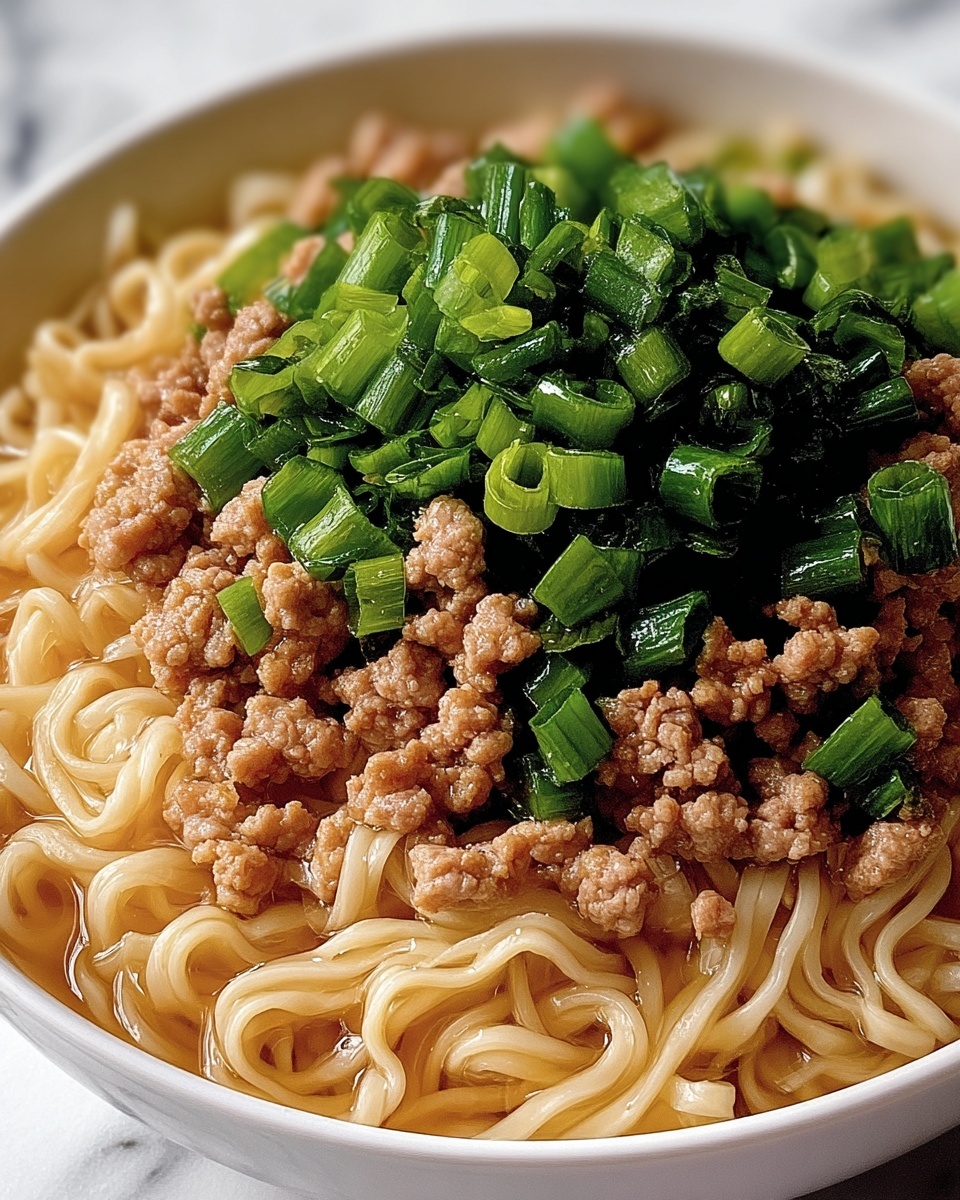
Garnishes
The right garnishes can elevate Dan Dan Noodles from delicious to spectacular. Crunchy peanuts add texture, while green onions introduce a burst of fresh, sharp flavor. A drizzle of chili oil is perfect for those who like their noodles with an extra kick. If you enjoy herbs, fresh cilantro adds a refreshing bite that balances the boldness.
Side Dishes
To complement the intensity of Dan Dan Noodles, consider light and fresh sides. A cucumber salad with a touch of rice vinegar and sesame seeds feels cooling and refreshing. Steamed or sautéed bok choy offers mild greenery that pairs well without overpowering the main dish. Simple stir-fried greens or a carrot slaw can add a nice crunchy contrast.
Creative Ways to Present
This spicy Sichuan classic lends itself to beautiful presentation. Serve in deep bowls with a well of chili oil on top to create a vibrant red center. Garnish with whole roasted peanuts and create delicate piles of fresh herbs for color contrast. Don’t be shy about layering textures—letting ginger ribbons or finely shredded scallions tumble over the noodles creates a restaurant-worthy look that’s easy to replicate at home.
Make Ahead and Storage
Storing Leftovers
If you happen to have leftovers, store the noodles and sauce separately in airtight containers in the refrigerator. This way, the noodles won’t get soggy and the flavors stay fresh for the next meal. Consume within 2-3 days for the best taste.
Freezing
While the noodles themselves don’t freeze well due to texture changes, you can freeze the cooked sauce mixture in a freezer-safe container. When ready to eat, thaw overnight in the fridge and reheat gently before adding freshly cooked noodles.
Reheating
For reheating, warm the sauce gently in a pan over low heat until hot, stirring occasionally. Add freshly boiled noodles right before serving to keep that perfect chew. Avoid microwaving noodles alone or reheating everything together to prevent a mushy texture.
FAQs
Can I make Dan Dan Noodles vegetarian?
Absolutely! Swap the ground pork for minced mushrooms or firm tofu for a delicious vegetarian version. The doubanjiang and peanut butter sauce carry most of the umami and spice, so the dish remains full of flavor.
What if I can’t find doubanjiang?
Doubanjiang is key to authentic Sichuan heat, but if you can’t find it locally, look for a good-quality chili bean paste online or in Asian markets. As a last resort, a combination of chili paste with a bit of miso can mimic some of its depth, but the flavor won’t be quite the same.
Can I use other types of noodles?
While Chinese wheat noodles are traditional, you can experiment with linguine, spaghetti, or even ramen noodles. Just keep in mind the texture might slightly differ, but the sauce will still deliver on amazing taste.
How spicy is this dish?
This recipe brings a pleasant medium heat that can be adjusted. Adding more chili oil amps the spice level, while skipping it softens the heat for those sensitive to spice. The balance of savory, tangy, and nutty flavors always shines through.
Is this recipe suitable for meal prep?
Yes! Just store noodles and sauce separately as mentioned, and toss them together when ready to eat. The sauce can be made in advance and reheated quickly, making it a great option for flavorful weekday lunches.
Final Thoughts
There’s something truly special about enjoying a handmade bowl of Dan Dan Noodles that hits all the right notes—spicy, savory, and just a little bit nutty. With this Dan Dan Noodles: A Delicious Guide to This Spicy Sichuan Classic Recipe, you’re equipped to bring those vibrant flavors to your home kitchen with ease and confidence. So, gather your ingredients, turn on your stove, and get ready to fall in love with a dish that’s as fun to make as it is to eat. Happy cooking!
Print
Dan Dan Noodles: A Delicious Guide to This Spicy Sichuan Classic Recipe
- Prep Time: 15 minutes
- Cook Time: 20 minutes
- Total Time: 35 minutes
- Yield: 2-3 servings
- Category: Main Course
- Method: Stovetop
- Cuisine: Sichuan, Chinese
Description
Dan Dan Noodles are a fiery, flavorful classic from Sichuan cuisine, featuring tender Chinese wheat noodles tossed in a savory, spicy sauce made with ground pork, garlic, ginger, and bold doubanjiang paste. This easy-to-make dish combines the richness of peanut butter with the tang of rice vinegar and the warmth of chili oil, garnished with crunchy peanuts, fresh green onions, and optional cilantro for a perfect balance of heat, texture, and aroma.
Ingredients
Noodles
- 8 oz. fresh or dried Chinese wheat noodles
Sauce and Toppings
- 1 tablespoon vegetable oil
- 1/2 pound ground pork (or chicken, if preferred)
- 2 cloves garlic, minced
- 1 tablespoon ginger, minced
- 2 tablespoons doubanjiang (spicy bean paste)
- 1 tablespoon soy sauce
- 1 tablespoon rice vinegar
- 1 tablespoon sesame oil
- 1 tablespoon peanut butter (or tahini for a different flavor)
- 1 cup chicken broth (or water)
- 2 green onions, chopped (for garnish)
- 1/4 cup roasted peanuts, crushed (for garnish)
- 1 tablespoon chili oil (optional, for extra heat)
- Fresh cilantro (for garnish, optional)
Instructions
- Boil Noodles: Boil a large pot of water with a pinch of salt to prepare for cooking the noodles.
- Cook Noodles: Add Chinese wheat noodles to the boiling water. Fresh noodles cook in 2-3 minutes; dried noodles take 5-7 minutes to become tender. Stir occasionally to prevent sticking.
- Drain and Rinse: Drain the cooked noodles and rinse them under cold water to stop the cooking process. Set aside.
- Heat Oil and Cook Meat: Heat vegetable oil in a large skillet or wok over medium heat. Add the ground pork or chicken, sautéing until browned, approximately 5-7 minutes.
- Add Aromatics: Stir in minced garlic and ginger, cooking for about 1 minute until fragrant.
- Add Spice Paste: Incorporate doubanjiang paste and mix it thoroughly with the meat for a deep spicy flavor.
- Season Sauce: Pour in soy sauce, rice vinegar, and sesame oil, stirring for 2 minutes to blend all the flavors.
- Create Creamy Sauce: Add peanut butter or tahini and stir until smooth and creamy.
- Add Broth and Simmer: Gradually pour in chicken broth or water while stirring. Let the sauce simmer for 3-5 minutes to thicken slightly.
- Combine Noodles and Sauce: Add the cooked noodles to the skillet, tossing to coat thoroughly. If the sauce is too thick, add extra broth or water to loosen.
- Heat Through: Cook the noodles and sauce together for another 2-3 minutes until heated evenly.
- Serve and Garnish: Remove from heat and portion into serving bowls. Garnish with chopped green onions, crushed peanuts, chili oil if desired, and optionally fresh cilantro for extra freshness.
- Enjoy: Serve immediately to enjoy the harmonious layers of spicy, savory, and nutty flavors in this Sichuan classic.
Notes
- You can substitute ground pork with ground chicken or turkey for a leaner option.
- If doubanjiang is unavailable, a combination of chili paste and fermented bean paste can work as a substitute, though the flavor will vary slightly.
- Adjust chili oil quantity based on your heat preference; omit for a milder version.
- For vegan adaptation, replace meat with crumbled tofu and use vegetable broth instead of chicken broth.
- Use tahini instead of peanut butter for a different but delicious nutty flavor profile.
- Leftover sauce can be stored separately and used with freshly boiled noodles later.