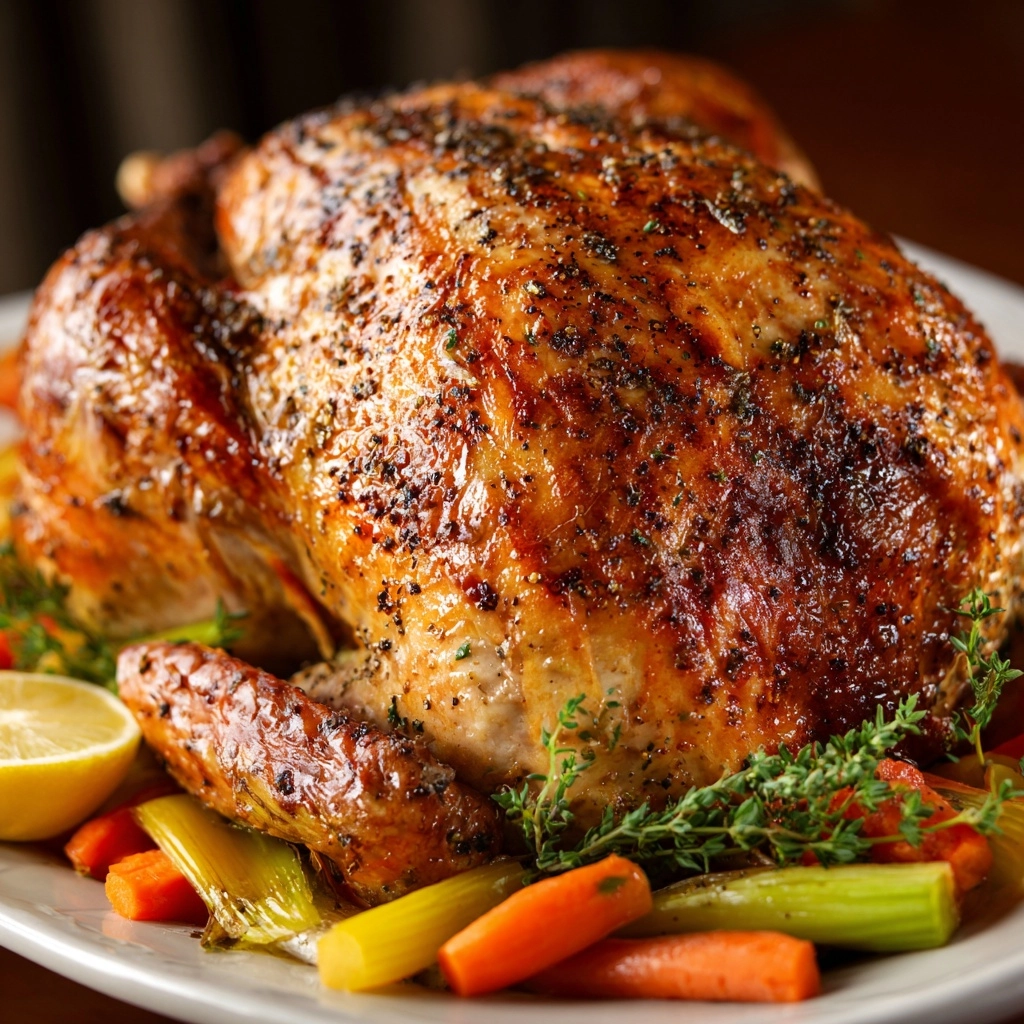
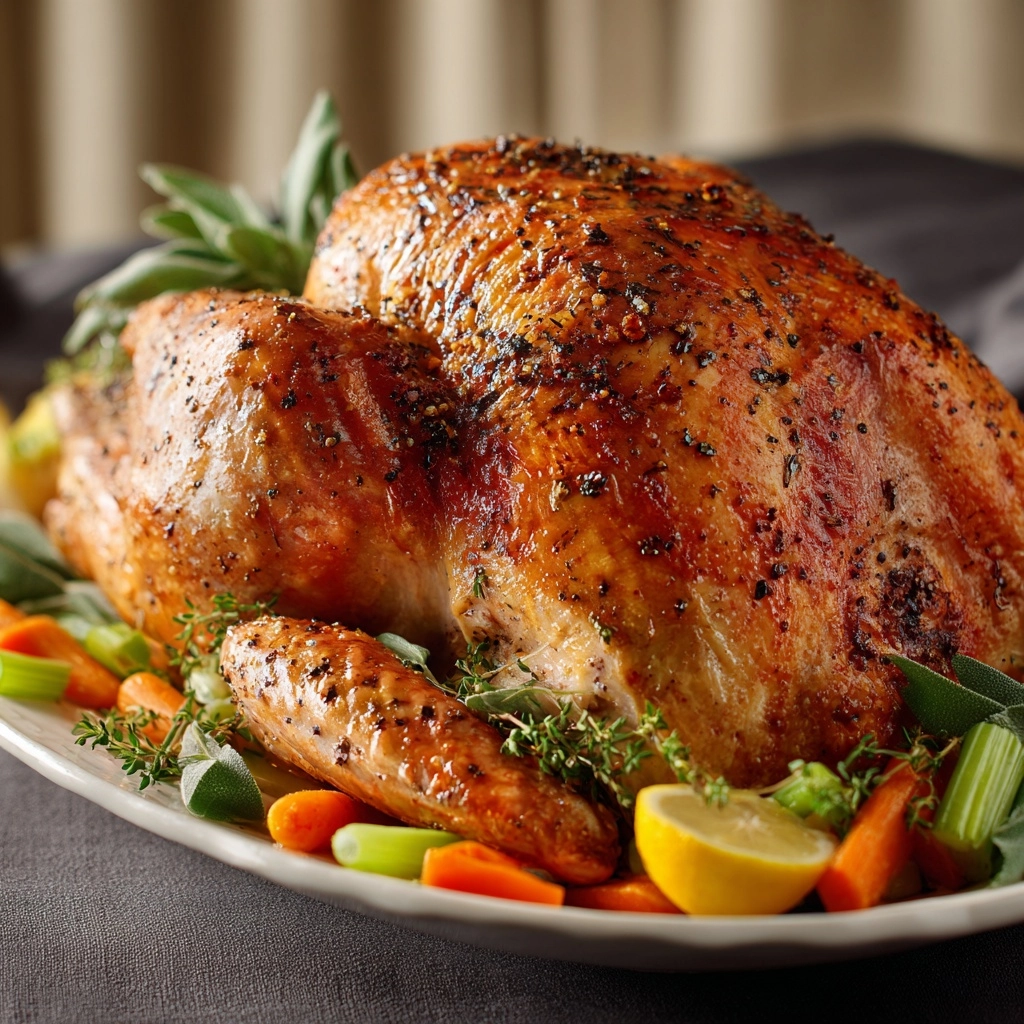
If you’re dreaming of a centerpiece that brings warmth, tradition, and a burst of herb-infused flavor to your table, the Classic Roasted Turkey Recipe is your go-to. This recipe combines simple, fresh ingredients with a straightforward roasting method to create a juicy, tender turkey with perfectly crispy skin every time. Whether it’s a holiday celebration, a family gathering, or any special occasion, this Classic Roasted Turkey Recipe delivers that comforting, satisfying roast turkey experience we all crave.
Ingredients You’ll Need
These ingredients are beautifully simple yet vital to create that unforgettable roasted turkey bursting with rich, savory flavor. Each element plays a key role—from the herbs that infuse the meat with freshness to the butter that guarantees luscious, crispy skin.
- Whole turkey (12–14 pounds): Provides the perfect size for a family feast with tender meat and crispy skin.
- Unsalted butter (1/2 cup, softened): Essential for basting and adding a rich, golden crust with herbs.
- Salt (1 tablespoon): Enhances flavor and helps retain moisture for juiciness.
- Black pepper (1 teaspoon): Adds subtle heat and complements the herbs.
- Garlic powder (1 tablespoon): Offers a warm, mellow garlic depth throughout the turkey.
- Onion powder (1 tablespoon): Boosts savory notes and rounds out the seasoning.
- Fresh rosemary (1 tablespoon, chopped): Brings an earthy, piney aroma that pairs perfectly with poultry.
- Fresh thyme (1 tablespoon, chopped): Adds a gentle lemony, herbal touch to the profile.
- Fresh sage (1 tablespoon, chopped): Delivers a classic herbaceous note vital for traditional roast turkey.
- Onion (1, quartered): Provides fragrance and moisture when stuffed inside the cavity.
- Lemon (1, halved): Brightens the turkey with citrusy zest and tenderizes meat internally.
- Head of garlic (1, halved crosswise): Adds a mellow roasted garlic flavor that infuses from the inside out.
- Low-sodium chicken or turkey broth (2 cups): Keeps the roasting pan moist and creates a flavorful base for drippings or gravy.
How to Make Classic Roasted Turkey Recipe
Step 1: Prep Your Turkey
Start by preheating your oven to 325°F. Carefully remove the giblets and neck from inside the turkey’s cavity—these can be saved for making stock later if you like. Pat the turkey dry with paper towels; this step is crucial for crisp skin. Position the bird breast-side up on a rack inside a large roasting pan to allow even heat circulation.
Step 2: Herb Butter Magic
Mix together softened butter, salt, pepper, garlic powder, onion powder, and those fragrant fresh herbs—rosemary, thyme, and sage. Gently loosen the skin over the breast and spread about half this herby butter mixture underneath the skin, directly onto the meat. Then rub the remaining butter all over the outside of the turkey for that golden finish and irresistible flavor.
Step 3: Stuff and Secure
Stuff the cavity with quartered onion, halved lemon, and garlic for a subtle but effective infusion of aroma and moisture. Tuck the wing tips under the bird to prevent burning, and if you want a tidy presentation, tie the legs together with kitchen twine. Pour the broth into the bottom of your roasting pan—it will keep the pan juices flowing and help with basting.
Step 4: Roast and Baste
Roast the turkey for about 15 minutes per pound, roughly 3 to 3 1/2 hours for a 12–14 pound bird. Use a meat thermometer to check that the internal temperature of the thickest part of the thigh reaches 165°F. Baste generously with pan juices every 45 minutes to keep your turkey moist and flavorful. If you notice the skin darkening too quickly, tent a piece of foil loosely over the bird to prevent burning while allowing it to keep roasting.
Step 5: Rest Before Carving
Once done, don’t rush! Let your turkey rest for at least 20 to 30 minutes after coming out of the oven. This crucial resting period allows the juices to redistribute so every slice is juicy and tender rather than dry. It’s the secret behind a perfect carved turkey every time.
How to Serve Classic Roasted Turkey Recipe
Garnishes
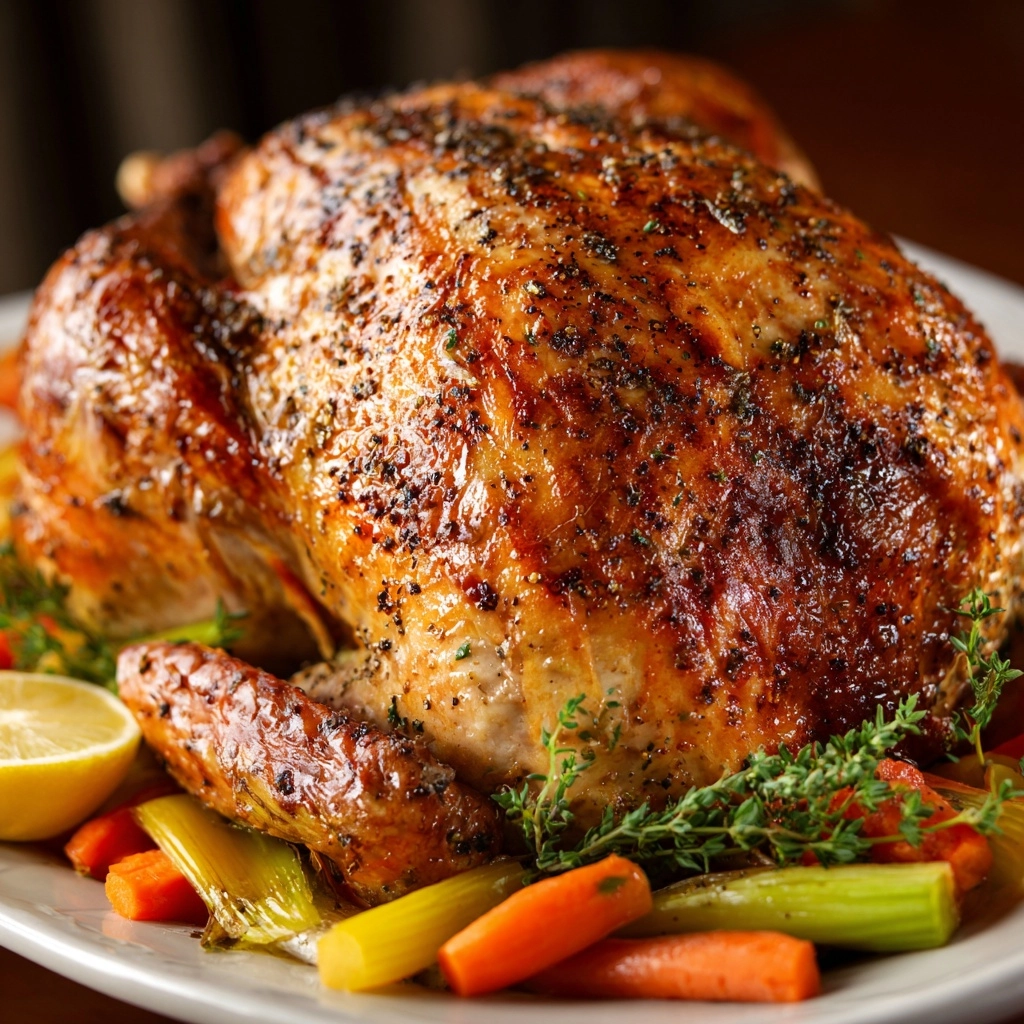
To elevate your Classic Roasted Turkey Recipe presentation, fresh sprigs of rosemary, thyme, and sage scattered around the platter add a lovely earthy aroma and a hint of green. A few lemon wedges on the side brighten the look and can be squeezed on for an extra citrus note as your guests dig in.
Side Dishes
This turkey pairs beautifully with traditional sides like creamy mashed potatoes, savory stuffing, cranberry sauce, and green beans almondine. The rich herb butter flavor on the turkey complements buttery sides and tangy cranberries, bringing together a festive plate of delicious contrasts and harmonies.
Creative Ways to Present
For gatherings, consider carving the turkey at the table for that wow factor, letting guests see the luscious, herb-rubbed crust and tender meat. Alternatively, arrange carved slices in overlapping layers on a farmhouse wooden board with roasted vegetables and garnish for a rustic, inviting look that invites everyone to dig in.
Make Ahead and Storage
Storing Leftovers
Store leftover turkey in airtight containers in the refrigerator for up to 4 days. To keep slices moist, place a damp paper towel on top before sealing the container—this tricks the meat into staying juicy and ready-to-reheat.
Freezing
If you want to save turkey beyond a few days, freeze cooked turkey in portion-sized airtight freezer bags or containers. Wrap slices tightly to avoid freezer burn, and the turkey will keep well for up to 3 months, maintaining the delicious flavors of your Classic Roasted Turkey Recipe.
Reheating
Reheat leftover turkey gently in the oven at 325°F, wrapped in foil with a splash of broth for moisture. This method warms the meat evenly without drying it out, recreating that just-roasted tenderness we all love.
FAQs
Can I prepare the turkey ahead of time?
Absolutely! You can dry brine the turkey with salt and herbs the day before roasting to enhance flavor and tenderness. Just remember to pat it dry before adding the herb butter to ensure crispy skin when roasting.
What if I don’t have fresh herbs?
While fresh herbs offer the best aroma and flavor, dried rosemary, thyme, and sage can be substituted at half the quantity. Just mix them well into the butter for a tasty alternative.
How do I know when the turkey is perfectly cooked?
The surest way is to use a meat thermometer. Insert it into the thickest part of the thigh; 165°F is the safe temperature that signals your turkey is juicy, tender, and ready to rest before carving.
Can I use broth other than chicken or turkey?
Yes, vegetable broth works fine if you prefer a lighter flavor or want to keep the dish lighter. The key is just to have some liquid in the pan for basting and moisture during roasting.
Should I baste the turkey during roasting?
Basting every 45 minutes helps keep the skin moist and adds flavor from the pan juices. It’s an easy step that pays off with a gorgeous golden crust and succulent meat inside.
Final Thoughts
There’s something truly special about mastering the Classic Roasted Turkey Recipe. It’s not just a meal, it’s a labor of love that brings everyone to the table, ready to share stories, laughter, and gratitude. I can’t wait for you to try this recipe and experience the joy of biting into perfectly roasted, herby, juicy turkey that feels like home on a plate. Happy roasting!
Print
Classic Roasted Turkey Recipe
- Prep Time: 30 minutes
- Cook Time: 3 hours 30 minutes
- Total Time: 4 hours 30 minutes
- Yield: 12 servings
- Category: Main Course
- Method: Roasting
- Cuisine: American
- Diet: Gluten Free
Description
This Classic Roasted Turkey recipe offers a succulent, herb-infused centerpiece perfect for holiday gatherings like Thanksgiving. The turkey is rubbed under the skin and outside with a flavorful butter and herb mixture, then roasted to perfection until juicy and tender. Aromatics like lemon, onion, and garlic in the cavity enhance the bird’s natural flavors, while basting keeps the skin beautifully golden and crisp. Easy to follow and reliably delicious, this recipe guarantees a show-stopping main course.
Ingredients
Turkey and Aromatics
- 1 whole turkey (12–14 pounds), thawed if frozen
- 1 onion, quartered
- 1 lemon, halved
- 1 head of garlic, halved crosswise
- 2 cups low-sodium chicken or turkey broth
Herb Butter Mixture
- 1/2 cup unsalted butter, softened
- 1 tablespoon salt
- 1 teaspoon black pepper
- 1 tablespoon garlic powder
- 1 tablespoon onion powder
- 1 tablespoon fresh rosemary, chopped
- 1 tablespoon fresh thyme, chopped
- 1 tablespoon fresh sage, chopped
Instructions
- Preheat and prepare the turkey: Preheat your oven to 325°F. Remove any giblets and the neck from inside the turkey cavity, then pat the turkey dry thoroughly using paper towels. Place the turkey breast-side up on a rack set inside a large roasting pan.
- Make and apply the herb butter: In a small bowl, combine the softened butter with salt, pepper, garlic powder, onion powder, rosemary, thyme, and sage. Gently loosen the skin over the turkey breast without tearing it, and rub about half of the herb butter mixture underneath the skin directly onto the meat. Use the remaining butter to coat the outside of the turkey evenly.
- Stuff and arrange the turkey: Stuff the cavity with the quartered onion, halved lemon, and garlic head pieces. Tuck the wing tips underneath the turkey to prevent burning. Optionally, tie the legs together securely with kitchen twine. Pour the chicken or turkey broth into the bottom of the roasting pan to keep the environment moist during roasting.
- Roast the turkey: Roast in the preheated oven for approximately 15 minutes per pound, which is about 3 to 3 1/2 hours for a 12 to 14-pound turkey. Check the internal temperature with a meat thermometer – the thickest part of the thigh should reach 165°F. Baste the turkey with pan juices every 45 minutes to keep it moist and help the skin brown evenly. If the skin starts to brown too rapidly, loosely tent the bird with aluminum foil to prevent burning.
- Rest and carve: Once cooked, remove the turkey from the oven and let it rest uncovered for at least 20 to 30 minutes. Resting allows the juices to redistribute ensuring tender, juicy meat. After resting, carve the turkey and serve.
Notes
- For an even juicier turkey, consider dry brining it overnight with salt and herbs in the refrigerator before cooking.
- Use the flavorful drippings collected in the pan to create a rich and savory homemade gravy.
- Tying the legs helps maintain the bird’s shape and even cooking.
- Be sure to use a meat thermometer to avoid undercooking or overcooking the turkey.