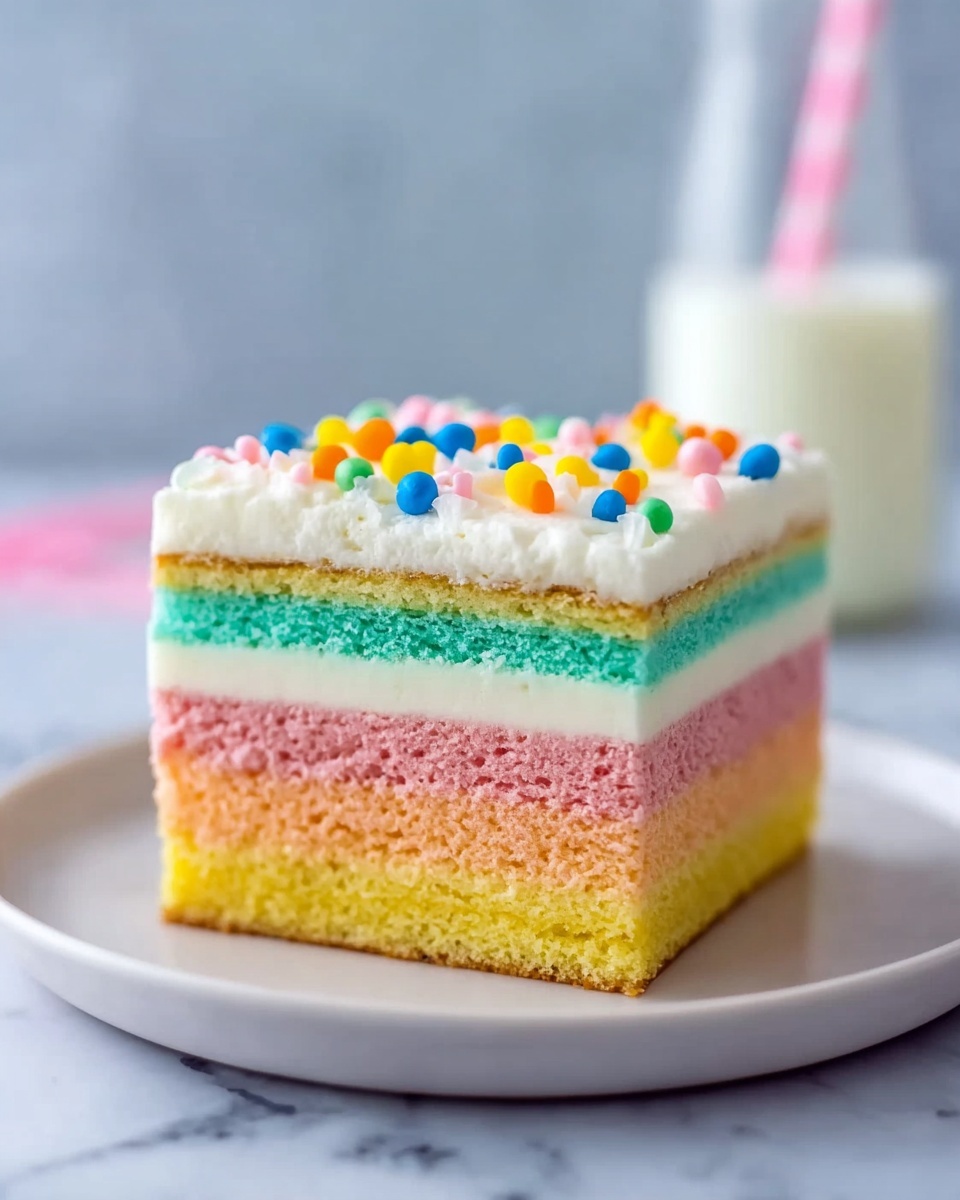
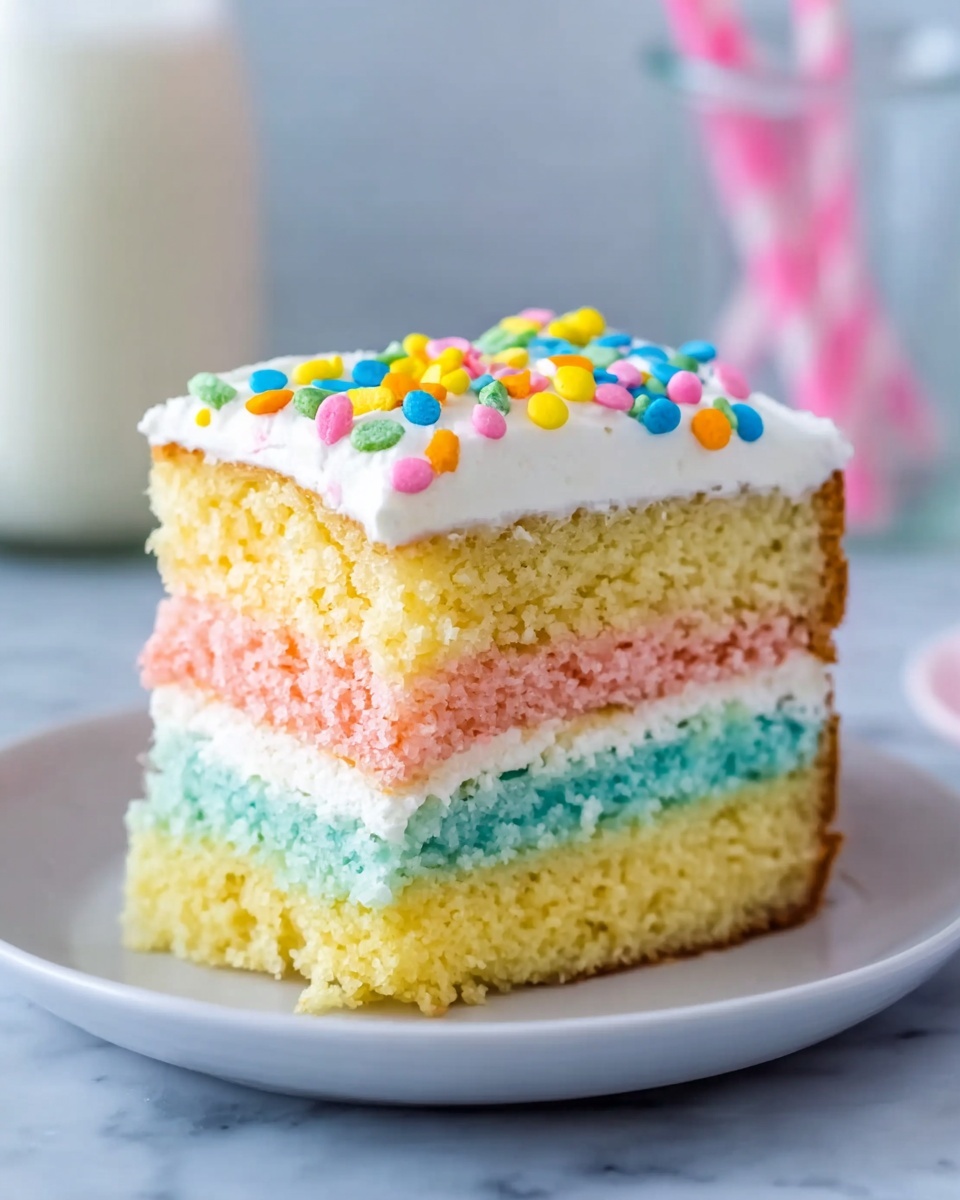
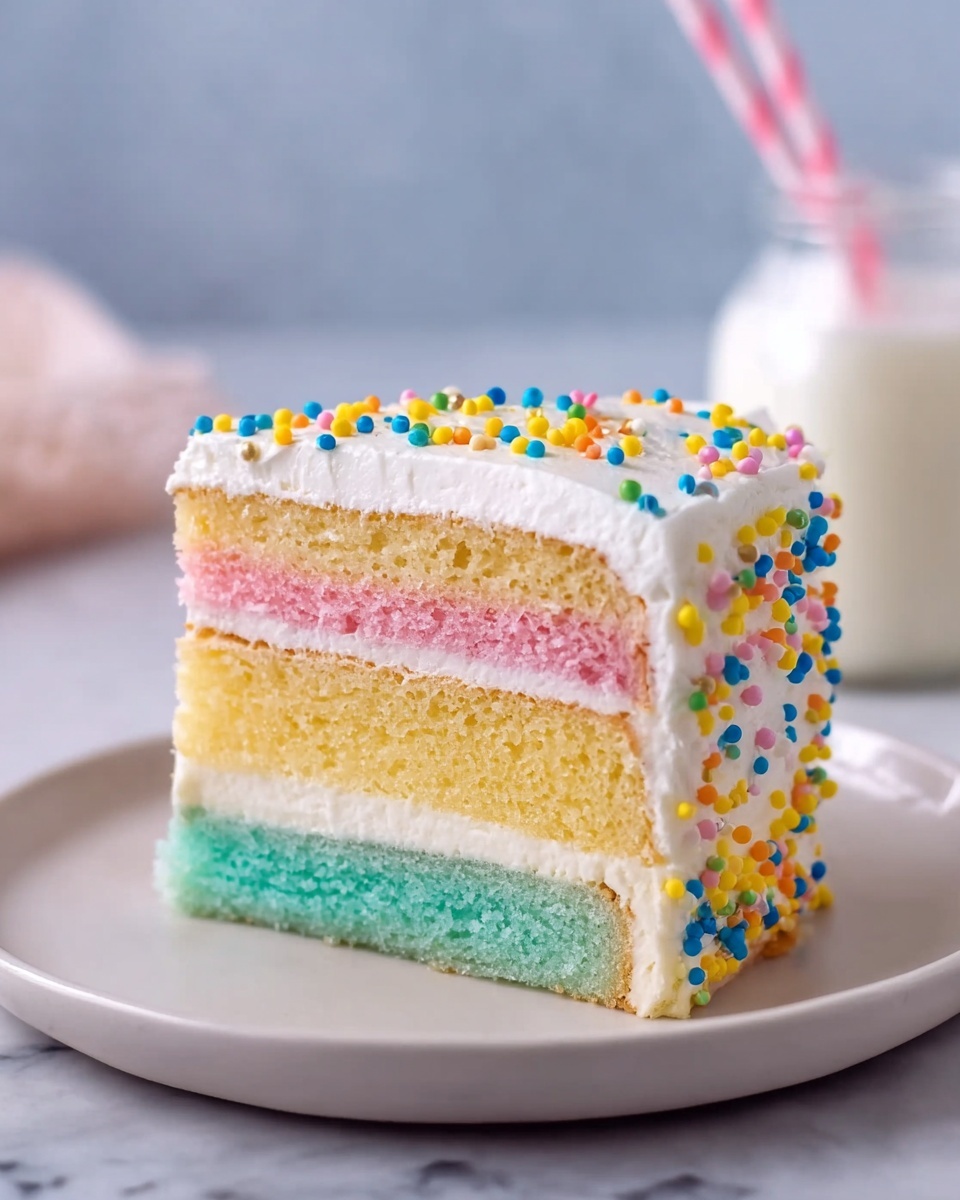
If you are looking to delight your family and friends with a vibrant and joyful dessert this spring, the Easy Pastel Easter Cake Recipe is a must-try. This cake steals the show with its soft, fluffy texture and charming pastel swirls that bring the spirit of Easter right to your table. Not only is it visually stunning, but the flavor is delightfully moist and not overly sweet, complemented perfectly by its luscious, creamy frosting. Baking this cake is a fun and rewarding experience, making it a wonderful project to share with loved ones during the Easter season.
Ingredients You’ll Need
Whipping up this Easy Pastel Easter Cake Recipe requires ingredients that are simple and easy to find, yet each one plays an essential role in creating that perfect balance of moistness, flavor, and pastel charm.
- White cake mix: This forms the base of the cake and guarantees a tender, light crumb with minimal effort.
- Water: Adds moisture to the cake batter, ensuring it bakes up soft rather than dry.
- Egg whites: Helps create a delicate texture and supports the cake’s rise without heaviness.
- Vegetable oil: Keeps the cake moist and adds richness without overpowering flavors.
- Sour cream: Adds a subtle tang and extra softness, enhancing the cake’s moistness beautifully.
- Clear vanilla extract: Offers a gentle vanilla flavor without darkening the batter’s pristine white color.
- Blue, pink, and yellow food coloring: The key to achieving those stunning pastel swirls that make the cake so festive.
- Pastel-colored sprinkles: Adds a fun, crunchy finish and a burst of playful color on top of the frosting.
- Butter, softened: For the frosting, it provides the rich, creamy base essential for a smooth texture.
- Powdered sugar: Sweetens and thickens the frosting to the perfect consistency.
- Salt: Balances the sweetness and enhances the overall flavor of the frosting.
- Vanilla extract: Deepens the frosting’s flavor with warm, familiar notes.
- Heavy cream or milk: Used to adjust the frosting’s consistency, keeping it fluffy and spreadable.
How to Make Easy Pastel Easter Cake Recipe
Step 1: Prepare Your Baking Dish and Oven
Start by preheating your oven to 350°F (175°C) and greasing a 9×13 inch baking dish. This ensures your cake cooks evenly and doesn’t stick, setting the stage for a perfectly baked pastel creation.
Step 2: Mix the Cake Batter
In a large mixing bowl, combine the white cake mix, water, egg whites, vegetable oil, sour cream, and clear vanilla extract. Use an electric mixer on low speed for about 30 seconds to get everything incorporated, scraping down the sides of the bowl to mix evenly. Then beat on medium speed for 2 minutes, ensuring the batter becomes smooth and fluffy — this step is key to a tender cake texture.
Step 3: Pour the Base Layer
Pour two cups of the batter into your prepared baking dish. This plain layer acts as a pristine white canvas for your pastel swirls to contrast beautifully against.
Step 4: Color the Remaining Batter
Divide the remainder of the batter equally into three medium bowls. Add a few drops of blue, pink, and yellow food coloring to each bowl, one color per bowl. Stir each carefully until the batter reaches the perfect pastel hue — this is where the magic starts to come alive with soft, spring-inspired colors.
Step 5: Create the Pastel Swirl Effect
Dollop spoonfuls of each colored batter randomly over the white base batter. Then, using a butter knife, gently drag it back and forth through the batter to swirl the colors together without fully mixing — the result is a gorgeous, marbled pastel effect that feels like spring on a plate.
Step 6: Bake to Perfection
Bake your cake for 30 to 35 minutes, or until a toothpick inserted in the center comes out clean. Patience here rewards you with a perfectly set cake. Allow it to cool completely before moving on to the frosting — skipping the cooling step can cause the frosting to melt and slide off your masterpiece.
Step 7: Whip Up the Frosting
With an electric mixer, whip the softened butter for 1 to 2 minutes until it’s light and fluffy. Gradually add the powdered sugar and salt, then beat on low to medium speed for about a minute. Add the vanilla extract and two tablespoons of cream, whipping again. Adjust the consistency with additional cream if needed, and if desired, add a few drops of food coloring for a pastel-toned frosting that complements the cake’s swirls perfectly.
Step 8: Frost and Decorate
Spread the luscious frosting evenly over the cooled cake, then finish with generous sprinkles of pastel-colored decorations. This final touch transforms your cake into a festive centerpiece, bringing that Easter joy to everyone who sees it.
How to Serve Easy Pastel Easter Cake Recipe
Garnishes
Finishing touches like delicate edible flowers or tiny pastel candy eggs add an extra layer of charm and sophistication. The traditional pastel-colored sprinkles are lovely, but a handful of crushed pistachios or a light dusting of powdered sugar can also elevate presentation while adding flavor and texture.
Side Dishes
This airy, fruity cake pairs wonderfully with light accompaniments such as fresh whipped cream, a scoop of lemon sorbet, or a side of fresh spring berries. These sides complement the cake’s subtle sweetness and pastel theme without overpowering its delicate flavors.
Creative Ways to Present
Consider serving the cake on a rustic wooden board or a bright pastel cake stand to emphasize the seasonal vibe. For a fun twist, cut the cake into festive shapes using cookie cutters, perfect for an Easter brunch or a kid-friendly party. Wrapping individual slices in pastel tissue and tying with ribbon makes for charming edible gifts as well.
Make Ahead and Storage
Storing Leftovers
Once frosted, cover the cake loosely with plastic wrap or store in an airtight container to keep it moist. It will stay fresh at room temperature for up to two days, or in the refrigerator for up to four days. If refrigerated, bring the cake to room temperature before serving to enjoy maximum softness and flavor.
Freezing
This cake freezes beautifully if you want to prepare it ahead of time. Wrap individual slices or the entire unfrosted cake tightly in plastic wrap and place in a freezer-safe bag or container. When ready to enjoy, thaw in the refrigerator overnight, then frost and decorate as desired for a freshly made taste.
Reheating
You typically don’t want to reheat cake with frosting, but if you serve the cake unfrosted, gently warm slices in the microwave for 10 to 15 seconds to bring back softness and that just-baked feel. Adding a small spoonful of whipped cream or frosting on the side will perk up the experience beautifully.
FAQs
Can I use regular vanilla extract instead of clear vanilla extract?
Yes, you can use regular vanilla extract, but it may tint the batter slightly, making the pastel colors less vibrant. The clear vanilla is recommended to keep the cake’s colors bright and true to pastel tones.
Is it possible to make this cake gluten-free?
Absolutely! Use a gluten-free white cake mix as a substitute, ensuring it’s one that performs well baked. This alteration won’t impact the flavor or the beautiful pastel swirls.
Can I substitute sour cream with Greek yogurt?
Yes, Greek yogurt works as a great substitute for sour cream if you want a slightly tangier flavor and similar moistness. Just make sure it’s plain and full-fat for the best results.
How do I get the perfect pastel colors without making the batter too wet?
Use gel food coloring if possible, as it provides vivid hues without altering the consistency of your batter. Add the coloring drop by drop and mix gently until you reach your desired pastel shade.
Can I make this cake into cupcakes?
Definitely! Just adjust the baking time to about 18-22 minutes depending on your oven, and fill your cupcake liners about two-thirds full. Decorate cupcakes with the same frosting and sprinkles for an adorable, portable version of the cake.
Final Thoughts
There is something truly special about sharing the joy of the Easy Pastel Easter Cake Recipe with loved ones during the festive season. Its easy-to-follow steps, cheerful colors, and moist texture make it the ultimate Easter treat that brings smiles and sweet moments to any celebration. Give this recipe a try and enjoy baking and savoring a cake that’s as delightful to make as it is to eat.
Print
Easy Pastel Easter Cake Recipe
- Prep Time: 25 minutes
- Cook Time: 35 minutes
- Total Time: 1 hour
- Yield: 12 servings
- Category: Dessert
- Method: Baking
- Cuisine: American
Description
This Easy Pastel Easter Cake is a delightful and festive dessert perfect for celebrating the spring season. Featuring a classic white cake base swirled with pastel-colored batter and topped with a fluffy buttercream frosting decorated with pastel sprinkles, this cake is sure to be the centerpiece of your Easter table. The recipe is straightforward, utilizing a boxed cake mix and simple ingredients, making it accessible for bakers of all skill levels.
Ingredients
Cake Ingredients
- 1 box white cake mix
- ¼ cup water
- 4 egg whites
- ½ cup vegetable oil
- 1 cup sour cream
- 1–2 teaspoons clear vanilla extract
- Blue, pink, and yellow food coloring (either gel or liquid)
Frosting Ingredients
- ½ cup butter, softened (not melted)
- 2 cups powdered sugar
- ¼ teaspoon salt
- 1½ teaspoons vanilla extract
- 2–4 teaspoons heavy cream or milk
- Food coloring (optional)
- Pastel-colored sprinkles for decoration
Instructions
- Preheat and Prepare: Preheat your oven to 350°F (175°C) and grease a 9×13 inch baking dish thoroughly to ensure the cake does not stick during baking.
- Mix Cake Batter: In a large mixing bowl, combine the white cake mix, water, egg whites, vegetable oil, sour cream, and clear vanilla extract. Use an electric mixer on low speed for 30 seconds to start combining the ingredients. Scrape down the sides of the bowl, then beat on medium speed for 2 minutes more until the batter is smooth and well mixed.
- Pour Base Batter: Pour about 2 cups of the batter into the prepared baking dish. This will form the white base layer of the cake.
- Color Remaining Batter: Divide the remaining batter evenly into three medium bowls (approximately ½ cup each). Add a few drops of blue, pink, and yellow food coloring to each bowl respectively. Stir well after each drop until the batter reaches the desired pastel shade.
- Create Swirls: Drop spoonfuls of each colored batter randomly over the white base layer in the baking dish. Take a butter knife and gently run it back and forth through the batter to create a pretty swirl effect with the pastel colors.
- Bake the Cake: Place the cake in the preheated oven and bake for 30-35 minutes, or until a toothpick inserted into the center comes out clean. Allow the cake to cool completely before frosting.
- Prepare Frosting: Using an electric mixer, beat the softened butter for 1-2 minutes until it becomes lighter in color and slightly fluffy. Gradually add powdered sugar and salt, mixing on low to medium speed for about 1 minute until combined. Add vanilla extract and 2 tablespoons of heavy cream or milk, beating for another minute. If desired, add food coloring to achieve a pastel frosting color. Add more cream/milk as needed to reach the desired frosting consistency. Whip the frosting for an additional minute until light and fluffy.
- Frost and Decorate: Spread the frosting evenly over the cooled cake. Finish by decorating the top with pastel-colored sprinkles to enhance the festive Easter presentation.
Notes
- Use clear vanilla extract to keep the cake batter light and bright for pastel coloring.
- Ensure butter is softened but not melted for a smooth frosting texture.
- Do not overmix the batter once colored to maintain the swirl pattern.
- Use gel food coloring for more vibrant pastel hues without thinning the batter.
- Allow the cake to cool completely before frosting to prevent the frosting from melting.